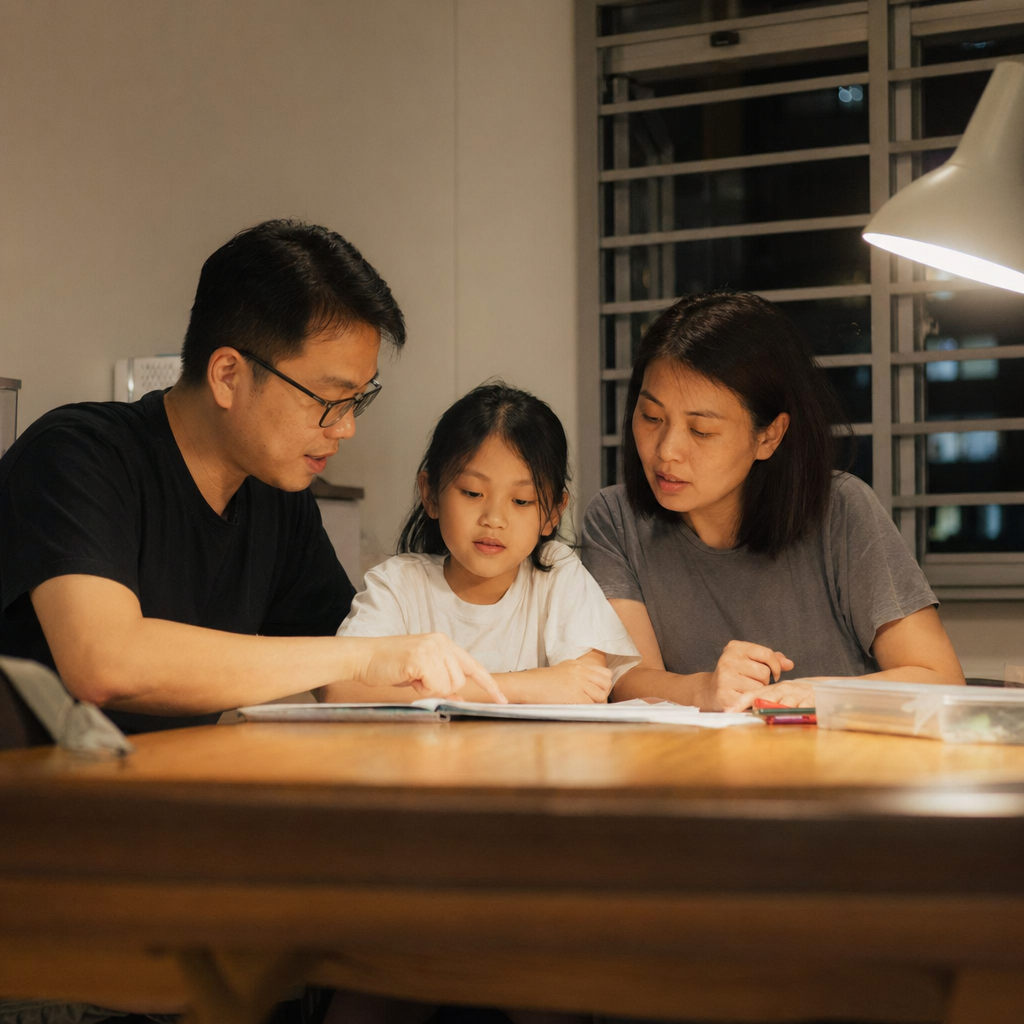
For many Singapore families, PSLE preparation does not happen in a calm, perfectly planned environment. It happens in between the morning rush, office calls, packed school bags, dinner prep, and those late-night moments at the dining table when someone is still flipping through worksheets with half-open eyes. In a dual-income household, the challenge is not just helping your child revise. It is figuring out how to support them consistently when both parents are already stretched thin.
If this sounds familiar, you are definitely not alone. One parent may be stuck in traffic after work, the other may still be replying to emails at 9pm, and your child is waiting for someone to go through a Science open-ended question or explain a Math mistake. That kind of daily pressure can make PSLE preparation feel much heavier than it needs to be. The good news is that your child does not need two exhausted parents hovering over every page to do well. What they really need is a realistic system, clear routines, and the right support in the right areas.
This guide is for time-poor parents who want practical ways to manage PSLE year without turning the home into a constant battleground.
Key Takeaways
Build a realistic weekly system, not a perfect daily plan. A workable PSLE study schedule for working parents should account for long workdays, tuition timing, and your child’s actual energy levels after school. Weekly structure is often easier to maintain than a rigid daily plan because it gives your family room to adjust when work or school schedules shift.
Focus on consistency over long study hours. For many children, 45 to 90 minutes of focused revision on weekdays works better than forcing three tired hours at night. Shorter, regular sessions often lead to better retention and less resistance than marathon revision blocks.
Create a simple home study routine for primary school students. A fixed place, fixed timing, and fixed start-up steps reduce daily friction, especially when parents are not always home on time. When the routine becomes automatic, your child is less likely to delay work or wait passively for instructions.
Use tuition strategically, not as a last-minute panic move. If both parents are juggling work, the right tutor can provide structure, accountability, and targeted help where your child is falling behind. Tuition works best when it fills a clear gap rather than adding more pressure to an already overloaded schedule.
Prioritise emotional stability during PSLE preparation. Children in Primary 6 often pick up on family stress very quickly. Calm check-ins, clear expectations, and steady parent support strategies for PSLE preparation can make a real difference to confidence and motivation.
Plan around bottlenecks early. If weekends are always packed or weekday evenings are chaotic, solve that first. Good time management for PSLE students in Singapore starts with the family timetable, not just the child’s planner.
Why PSLE Preparation Feels Harder in a Dual-Income Household
Dual-income families often have the financial ability to invest in support, but that does not remove the emotional and logistical strain of PSLE preparation. In fact, the difficulty is often more specific than people expect. You may be able to pay for assessment books, classes, or tuition, but still struggle to create a steady rhythm at home.
When both parents are busy, supervision becomes inconsistent
One common issue is uneven supervision. On Monday, your child gets home early and finishes revision smoothly. On Tuesday, one parent has a late meeting and the other only reaches home after 8pm. Suddenly, homework is rushed, corrections are skipped, and everyone is tense before bedtime. This kind of inconsistency affects momentum more than many parents realise.
Children preparing for PSLE usually do better when they know what happens each day. If every evening feels different, they may delay work, depend on reminders, or become anxious because they are not sure what matters most. A predictable routine reduces uncertainty and helps your child build self-management over time.
Guilt can lead to overcompensation
Working parents often carry guilt, even when they are doing their best. It may show up as buying more assessment books than needed, overloading weekends with extra classes, or trying to squeeze three subjects into one Sunday afternoon. But balancing work and child exam preparation is not about doing more. It is about deciding what actually helps.
For example, if your child is already mentally drained by Saturday evening, adding another full paper may lead to tears rather than progress. A better move may be one focused review session on weak topics, followed by proper rest. In many cases, less but better-planned revision produces stronger results.
The home atmosphere matters more than parents think
In PSLE year, children notice stress quickly. If every dinner conversation becomes about marks, your child may start associating home with pressure instead of support. A child who keeps hearing, “Did you finish your paper?” or “Why is this score so low?” every night may become defensive or simply shut down.
That is why effective parent support strategies for PSLE preparation must include emotional steadiness, not just academic monitoring. A calm home environment helps children stay receptive to feedback and more willing to keep trying after mistakes.
Building a PSLE Study Schedule for Working Parents
A strong PSLE study schedule for working parents should fit real life in Singapore, not an ideal timetable copied from social media. If both parents are working, the schedule has to survive commute delays, CCA changes, school workload, and plain old tiredness.
Start with fixed anchors, not hourly micromanagement
Instead of planning every 30 minutes, begin with fixed anchors in the week. For example:
Monday and Wednesday: Math revision after dinner. If your child usually gets home by 4pm but you only return at 7pm, set independent work first, then parent review later. Your child can complete two problem sums and mark corrections with an answer key before you check one difficult question at night.
Tuesday and Thursday: English or Science practice. This works well for subjects that need shorter but consistent exposure. A 30-minute comprehension practice on Tuesday and a 40-minute Science concept review on Thursday is usually more sustainable than one long session on Friday night.
Saturday morning: One deeper review block. This can be the time for a full paper, tutor session, or targeted revision. Morning often works better than late afternoon, when children are already mentally tired.
This kind of structure supports time management for PSLE students in Singapore because it reduces decision fatigue. Your child does not need to ask every day, “What should I do today?”
Match hard tasks to high-energy periods
A realistic schedule should reflect your child’s concentration patterns. Some children can handle problem-solving after dinner. Others are barely functioning by 8pm. If your child is yawning through fractions at night, move heavier work to weekends and use weekday evenings for lighter revision, such as corrections, vocabulary, or oral practice.
Parents often see better progress when they stop forcing difficult tasks into low-energy periods. Matching the task to the child’s mental state can improve both efficiency and mood.
Keep buffer time
Do not pack every slot. In dual-income homes, delays happen. A grandparent may not be available one day. A work call may run over. A child may come home with extra school assignments. Buffer time stops one disrupted evening from throwing the whole week off balance.
Even one open slot each week can make your PSLE preparation plan much more sustainable. It gives your family space to catch up without panic.
Creating a Home Study Routine for Primary School Students
A reliable home study routine for primary school students is especially important when parents cannot sit beside their child every evening. The goal is not independence overnight. The goal is to make the routine so familiar that your child can begin without drama.
Create a predictable start-up sequence
Many children waste the first 20 minutes of study time wandering around, snacking, sharpening pencils, and finding reasons not to begin. A start-up sequence helps. For example:
1. Wash up and have a snack.
2. Put phone or tablet away.
3. Take out the subject for the day.
4. Set a timer for 30 or 45 minutes.
5. Start with one task already written on a sticky note.
This sounds simple, but it makes a big difference. If your helper, grandparent, or older sibling is the one at home first, they can prompt the same sequence every day. That consistency is powerful during PSLE preparation because it reduces resistance before revision even begins.
Use a visible weekly board
A small whiteboard in the study corner can cut down on repeated nagging. Write the week’s subject focus, tuition timings, school deadlines, and one priority area such as “Science keywords” or “Math speed for Paper 1.” When your child sits down, they can see what matters immediately.
This is useful for balancing work and child exam preparation because parents can review the board quickly, even if they only have 10 minutes before bedtime. Instead of asking broad questions like “Did you study?”, you can ask, “Show me the Science corrections from today.”
Keep materials organised and easy to access
If every session begins with hunting for worksheets, everyone’s energy gets drained before the real work even starts. Use one tray for current school papers, one file for corrections, and one shelf for assessment books. In busy households, physical organisation saves emotional energy too.
A tidy study setup also makes it easier for any adult in the home to help your child stay on track, even if they are not the one usually managing revision.
Time Management for PSLE Students in Singapore Parents Can Actually Maintain
Good time management for PSLE students in Singapore is not about filling every free hour with work. It is about helping your child use limited time well, especially when family schedules are tight.
Break revision into focused blocks
Primary 6 students often cope better with shorter, focused blocks than with marathon sessions. A practical weekday format could be:
40 minutes: Current homework. This clears immediate school tasks first so your child does not carry unfinished work into the night.
10 minutes: Short break. A proper break helps reset attention and reduces frustration, especially after mentally demanding subjects.
30 minutes: Revision of one weak topic. For example, if your child struggles with model drawing, this block can focus only on that skill instead of trying to revise all of Math at once.
10 minutes: Quick review of mistakes. This final step reinforces learning and helps your child remember what to avoid next time.
This structure keeps progress visible and manageable, which is especially important in a busy dual-income household.
Protect sleep and recovery time
Some parents, out of desperation, let study sessions stretch too late. But a child doing corrections at 11pm is usually not learning much. In PSLE year, fatigue can quietly damage concentration, memory, and mood.
If your child has school, tuition, and homework, it may be wiser to cut one low-value worksheet than force another exhausted hour. Sustainable PSLE preparation includes rest, because a well-rested child learns faster and copes better with pressure.
Use commute and in-between pockets wisely
Not every revision task needs a desk. Oral reading can be done in the car. Vocabulary review can happen while waiting for dinner. Science keywords can be tested in the lift lobby before tuition. These small pockets help working parents stay involved without needing long uninterrupted blocks.
Used well, these moments support revision without making the day feel overloaded.
Review the week, not just the day
One useful habit for dual-income families is a short weekly review, ideally on Friday night or Sunday evening. Look at what was completed, what was skipped, and which subject caused the most stress. This helps parents adjust the next week’s plan before problems pile up.
A weekly review also teaches your child an important PSLE skill: reflection. Instead of seeing revision as endless work, they begin to notice patterns such as “I do better in the morning” or “I keep losing marks in open-ended Science questions.” That awareness makes future study time more effective.
Parent Support Strategies for PSLE Preparation When You Cannot Be There All the Time
One of the biggest fears in a dual-income household is this: if I am not physically present enough, am I failing my child? The answer is no. Strong parent support strategies for PSLE preparation are not measured only by hours spent at the table.
Replace constant monitoring with meaningful check-ins
A 10-minute focused check-in can be more effective than one hour of distracted supervision. For example, after work, instead of asking five rushed questions while unpacking dinner, sit down and ask:
What was the hardest question today?
Which subject feels most stressful this week?
Show me one mistake you now understand.
This kind of conversation helps your child reflect and feel supported, even on busy days. It also gives you a clearer sense of where help is actually needed.
Divide roles between parents clearly
In many homes, one parent ends up carrying the full mental load of PSLE preparation. That creates resentment and confusion. It helps to split responsibilities clearly. One parent handles communication with tutors and tracks test dates. The other reviews weekly progress and checks corrections on weekends.
When roles are clear, things are less likely to fall through the cracks, and your child receives more consistent support.
Know when outside support is the smart move
For families with demanding jobs, tuition is often not about outsourcing parenting. It is about creating stable academic support. If your child needs explanation, accountability, and regular practice in a subject you cannot consistently supervise, tuition can relieve pressure for both parent and child.
If you are exploring support, you can contact a tuition agency to discuss what kind of tutor fits your child’s needs.
When Tuition Helps PSLE Preparation in a Dual-Income Household
For many families, tuition becomes most helpful when it solves a specific problem. In a dual-income home, the right tutor can provide structure where time is limited and reduce nightly conflict around revision.
Tuition can create accountability between school and home
If your child tends to postpone revision until a parent comes home, a tutor can anchor the week. For example, a regular Tuesday session means your child knows corrections must be ready, weak topics will be reviewed, and someone will follow through.
This is especially useful for a PSLE study schedule for working parents, because not every parent can personally monitor every subject.
A tutor can target weak areas faster
Parents often know their child is “weak in Science” or “careless in Math,” but may not have time to diagnose the exact issue. A good tutor can identify whether the problem is content gaps, poor answering technique, slow processing, or lack of confidence.
That kind of targeted support matters in the final stretch of PSLE preparation, when time and energy need to be used carefully.
Home tuition can reduce logistical strain
For dual-income families, travel time matters. If your child is already tired after school, travelling out again for tuition can eat into rest and revision time. Home tuition can make the routine smoother and easier to sustain.
If you want to learn more
about how tutor matching works, you may also browse about us. For broader information on the PSLE and national curriculum expectations, parents can refer to the Ministry of Education Singapore.
Common Mistakes Dual-Income Parents Can Avoid
Even well-meaning parents can make PSLE year harder than necessary. A few common mistakes show up repeatedly.
First, avoid changing the plan every few days. If one worksheet goes badly, it does not always mean your child needs a whole new schedule, a new tutor, and three extra assessment books. Constant changes create confusion and make children feel that nothing is ever enough.
Second, do not let every adult give different instructions. If one parent says “finish homework first,” a grandparent says “do assessment book first,” and a tutor says “focus on corrections,” your child may end up doing none of them properly. Keep priorities simple and shared.
Third, be careful not to turn every car ride or meal into exam talk. Children need mental breathing space. Short breaks from PSLE discussions can actually improve cooperation later.
Frequently Asked Questions
How many hours a day should a Primary 6 child spend on PSLE preparation?
There is no single number that fits every child. On school days, many students do better with 45 to 90 minutes of focused revision outside homework, rather than very long sessions. If your child is attending tuition, the total load should still feel manageable. Quality matters more than clocking hours.
What if both parents come home late and cannot supervise daily?
You can still support your child well by setting a
fixed home study routine for primary school students, using a visible weekly plan, and arranging targeted tuition where needed. Daily supervision is helpful, but consistency in structure is often even more important.
Should we add more tuition if our child’s results are slipping?
Not automatically. First, identify why results are slipping. Your child may need better revision habits, more sleep, or help in one specific subject instead of more classes overall. The best support for PSLE preparation is targeted, not excessive.
How do we avoid constant arguments during PSLE year?
Reduce repeated nagging and replace it with routines, checklists, and short check-ins. Conflict often rises when expectations are unclear. A child who knows exactly what to do each day is less likely to resist than one who hears changing instructions every night.
Conclusion
Managing PSLE preparation in a dual-income household is not about becoming the perfect parent with endless time and patience. It is about building a system your family can actually maintain. A realistic PSLE study schedule for working parents, a steady home study routine for primary school students, practical time management for PSLE students in Singapore, and calm parent support strategies for PSLE preparation can make the year feel far less chaotic. Most importantly, balancing work and child exam preparation becomes easier when you stop aiming for constant supervision and start creating consistent support.
If you are looking for targeted academic support and a tutor who can fit your family’s schedule, our tutors at MindFlex are experienced, carefully matched to each student, and ready to help. Contact us for a free consultation and let us find the right tutor for your child.
Our home tuition rates are constantly updated based on rates quoted by Home Tutors in Singapore. These market rates are based on the volume of 10,000+ monthly tuition assignment applications over a pool of 30,000+ active home tutors.