


When you have more than one child at home, tuition decisions can get complicated very quickly. One child may be doing well in English but struggling badly with Math. Another may understand concepts quickly, but still lose marks because of careless mistakes or weak exam stamina. In this situation, a good tutor recommendation should not be based on convenience alone. It should be based on what each child actually needs.
Many parents in Singapore face this exact challenge. You want to be fair, practical, and mindful of cost, but you also do not want to push both children into the same arrangement if it clearly does not suit them. A Primary 4 child who needs patient, step-by-step guidance may need a very different tutor from a Secondary 2 sibling who wants a faster pace and more exam drilling. The right tutor recommendation takes into account subject gaps, personality, learning pace, and family logistics, without assuming siblings should be taught the same way.
If you are exploring home tuition for siblings Singapore families commonly consider, it helps to remember one simple principle: equal support does not always mean identical support. A thoughtful tuition plan starts by looking
at each child as an individual.
Key Takeaways
- A strong tutor recommendation for siblings should start with individual needs, not family convenience. For example, one child may need conceptual teaching while the other needs confidence-building and practice under timed conditions. Looking at each child separately helps parents avoid a setup that benefits one sibling but leaves the other frustrated.
- Choosing tutors for multiple children does not always mean hiring one tutor for everyone. In some homes, one tutor works well because the children are close in level and subject needs. In others, separate tutors lead to better progress, less comparison, and a calmer learning environment.
- A personalised tuition approach Singapore families can rely on should consider school level, subject combination, temperament, and schedule. A tutor who is excellent for a talkative primary school child may not suit a quiet upper secondary student who prefers independent thinking and concise guidance.
- When dealing with different learning styles children bring into the same household, parents should look beyond grades alone. A child who appears “weak” may actually need a different teaching style, more structure, or a tutor who can explain concepts in smaller steps.
- Good tuition matching tutor to student needs Singapore should include practical factors too, such as travel, lesson timing, sibling comparisons, and whether lessons at home create distraction. These details affect whether tuition is sustainable and effective over time.
- Home tuition for siblings Singapore can work very well when planned carefully, but it should never become a one-size-fits-all arrangement that leaves one child behind. The best results usually come from matching the format to the children, not forcing the children to fit the format.
- Does my child understand in class but cannot apply independently? For example, your child can follow when percentages are explained, but freezes when the problem is phrased differently in a school paper. This usually points to an application gap rather than a total lack of understanding.
- Is the issue pace, confidence, focus, or foundation? A child who keeps saying “I’m bad at Science” may actually be overwhelmed by open-ended questions, not weak in content. Identifying the true issue helps you find a tutor who can target the right problem.
- Does my child respond better to structure or discussion? Some children need a tutor who breaks work into small steps and checks understanding often. Others learn better when they can ask many questions and talk through ideas before attempting practice.
- Both children are close in level and subject needs. For example, two primary school siblings may both need English composition help and benefit from vocabulary building, reading comprehension strategies, and guided writing.
- Both are comfortable learning in the same space. Some siblings motivate each other. A younger child may feel encouraged seeing an older sibling work seriously, while the older child may become more responsible.
- The tutor is skilled at adjusting within the same session. This matters because even in a shared lesson, each child still needs individual attention, separate correction, and age-appropriate expectations.
- The siblings are far apart in level. A lower primary child and an upper secondary student rarely need the same teaching style, pace, or materials.
- One child needs intensive remediation while the other needs advanced work. If one is still struggling with multiplication while the other is preparing for IP or O-Level exam techniques, shared lessons may frustrate both.
- Sibling dynamics are affecting learning. If one child interrupts, competes, or answers over the other, the lesson may become emotionally draining instead of productive.
- Teaching pace. Some children need slower, more deliberate explanation, while others become disengaged if the lesson moves too slowly.
- Communication style. A tutor who is warm and encouraging may work well for an anxious child, while a direct and structured style may suit a student who needs stronger discipline.
- Ability to motivate without pressuring. The best tutors know how to challenge a student without making them feel defeated.
- Familiarity with the relevant school level and exam demands. Primary school support is very different from secondary school exam preparation, even within the same subject.
- Willingness to adapt materials and lesson structure. A tutor should be able to change the lesson plan when a child needs more revision, more practice, or a different explanation method.
- Giving each child separate learning goals. For instance, “You are working on showing full workings,” instead of “Why can’t you do it like your brother?” This keeps the focus on personal progress.
- Avoiding post-lesson comparison. Do not ask, “Who did better today?” Ask each child what they understood better than before. This encourages reflection instead of competition.
- Letting tutors know about sibling sensitivity. A tutor who understands the family dynamic can phrase feedback more carefully and avoid creating unnecessary tension.
- Each child’s level and subject. This gives the tutor or agency a basic starting point for matching subject expertise and teaching experience.
- Recent results and patterns, not just one score. A trend of weak comprehension or repeated careless mistakes is more useful than a single test mark.
- Specific struggles, such as comprehension, careless mistakes, weak foundation, or low confidence. These details help narrow down the kind of tutor style your child may need.
- Personality notes, such as shy, easily distracted, resistant to correction, or highly independent. Personality often affects lesson success just as much as academic level.
- Preferred schedule and whether lessons may be individual or shared. This helps avoid recommendations that look good on paper but do not work in practice.
- Has the tutor taught both levels before? Experience across levels matters if you are considering one tutor for multiple children.
- How would the tutor handle siblings with different needs? This reveals whether the tutor has a real strategy or is simply saying yes to the arrangement.
- Would the lessons be separate, combined, or partly both? The format should be clear from the start so expectations are realistic.
- How does the tutor adapt for different learning styles? A good tutor should be able to explain how they change their approach for different students.
- What feedback can parents expect for each child? Separate feedback helps you monitor whether both children are benefiting.
Why a Good Tutor Recommendation for Siblings Must Be Individual, Not Shared by Default
It is tempting to look for one tutor who can handle both children. On paper, it sounds efficient. One time slot, one teacher, one transport arrangement if lessons are outside, and one monthly payment to track. But when siblings have different academic strengths, that setup can backfire.
Same home, different academic profiles
Children in the same family often learn very differently. One may be strong in languages and weak in numbers. Another may be the opposite. One may need repeated explanation and visual examples. Another may get impatient if the pace is too slow. This is why a proper tutor recommendation should begin with each child’s profile, not with the question, “Can one tutor teach both?”
Imagine this common situation in Singapore. Your older child in Secondary 3 needs help with Additional Math and Pure Chemistry, and is already fairly independent. Your younger child in Primary 5 struggles with basic fractions and still needs encouragement just to sit through a full lesson. Even if both need Math support, the teaching style required is completely different.
Convenience can hide mismatch
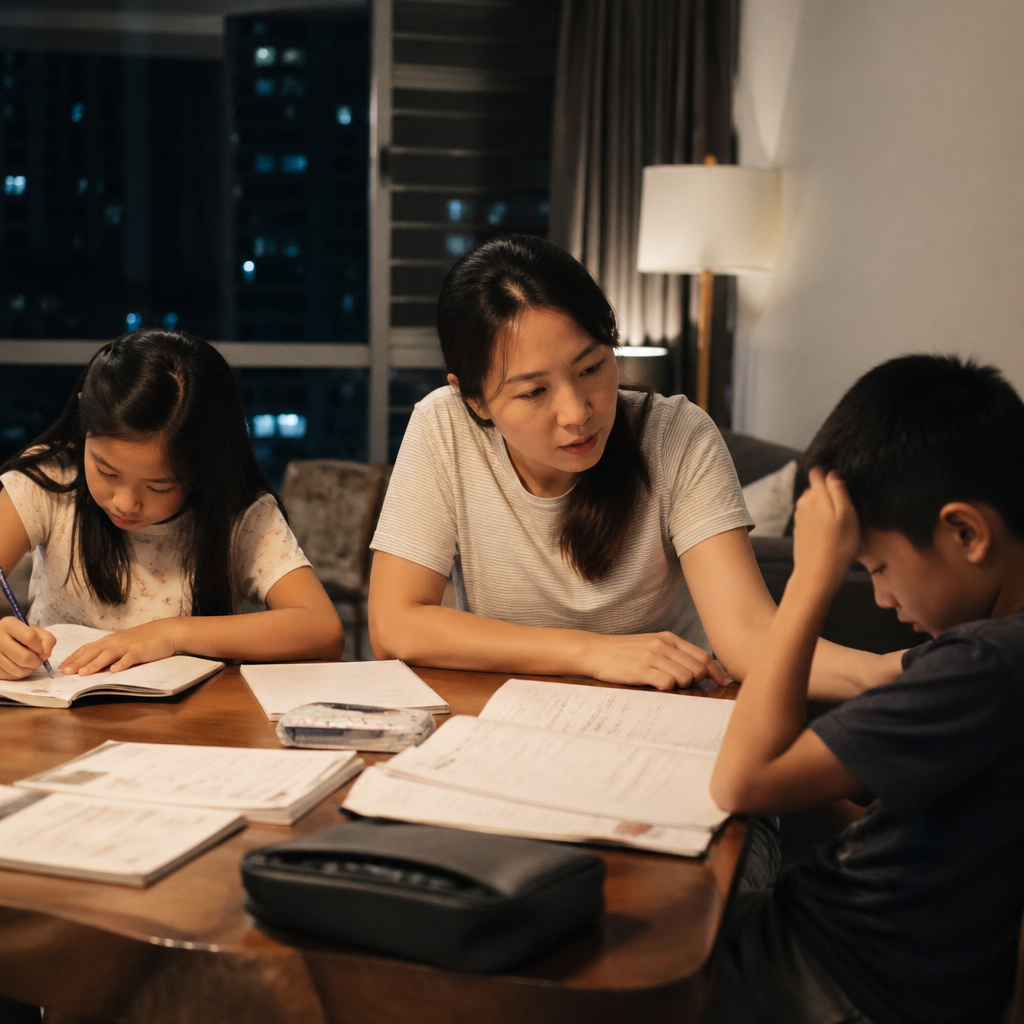
Parents are often juggling work, dinner, enrichment schedules, and school demands. By 8.30pm, one child may still have spelling corrections to finish while the other has a Science worksheet half done at the dining table. In that kind of moment, it is understandable to prioritise convenience. But a tutor who is a poor fit can create more stress later.
A child who feels constantly compared to a sibling during shared lessons may slowly withdraw. Another may dominate the session, leaving the quieter sibling lost and embarrassed to speak up. This is why choosing tutors for multiple children should focus on fit first, then logistics second. Convenience matters, but not at the expense of learning.
How to Assess Each Child Before Asking for a Tutor Recommendation
Before you request a tutor recommendation, it helps to be very clear about what is happening with each child. Many parents say, “Both need tuition,” but that is only the starting point. The more specific you are, the better the match will be.
Look at the real problem, not just the grade
A low mark does not always mean the same thing. One child may score 45 because they do not understand core concepts. Another may score 45 because they know the content but panic during tests. If both are simply labelled “weak in Math,” the tutor match may be too broad.
Try asking yourself:
This is especially important when considering the different learning styles children bring into the same household.
Note personality and lesson behaviour
A good tutor recommendation is not just about subject expertise. It is also about whether the tutor can connect with the child. One sibling may need a firm tutor who keeps them on task. Another may shut down under the same style and do better with a gentler approach.
Think about actual moments at home. Does one child avoid homework until you sit beside them? Does another rush through work carelessly because they are overconfident? Does one become anxious the moment you point out a mistake? These details matter. They help with tuition matching tutor to student needs Singapore families are really looking for, not just finding any available tutor.
Review school feedback and work samples
Another useful step is to look at teacher comments, marked worksheets, and recent test papers. These often reveal patterns that grades alone do not show. One child may lose marks because answers are incomplete. Another may understand the topic but misread keywords in the question. A tutor recommendation becomes much stronger when it is based on actual evidence of where the breakdown happens.
If possible, gather two or three recent pieces of work for each child before speaking to a tutor or agency. This makes it easier to explain whether the issue is content mastery, answering technique, time management, or consistency.
Choosing Between One Tutor or Separate Tutors for Multiple Children
This is one of the biggest questions parents ask. Is it better to have one tutor for both siblings, or separate tutors for each child? The answer depends on overlap, not just in subject, but in level, temperament, and learning needs.
When one tutor may work
One tutor may be suitable if:
In these cases, home tuition for siblings Singapore families choose can be efficient and effective.
When separate tutors are the better choice
Separate tutors are often better if:
This is where a thoughtful tutor recommendation becomes valuable. It helps parents avoid arrangements that look efficient but are not actually helping.
What to Look for in a Personalised Tuition Approach Singapore Parents Can Trust
A personalised tuition approach Singapore parents appreciate should feel specific, not generic. If a tutor or agency suggests the same format for every child, that is a red flag, especially when siblings have different strengths.
Subject knowledge is only one part of the fit
Of course the tutor must know the syllabus and level well. But beyond that, ask whether the tutor can teach in a way that suits the child. A strong upper primary Math tutor may still not be the right fit for a child who tears up when corrected too directly. A highly qualified secondary tutor may not have the patience to rebuild weak lower secondary foundations slowly.
A good match should consider:

For example, if one sibling learns best through worked examples and repetition, while another prefers concept discussion before practice, the tutoring approach should reflect that difference.
Ask how progress will be handled for each child
When choosing tutors for multiple children, parents should ask how progress will be tracked separately. This matters even if the lessons happen on the same day at home.
A good setup might look like this. Your Primary 6 child gets weekly updates on problem sums, model composition planning, and exam strategy. Your Secondary 1 child gets a different plan focused on note-making, answering techniques, and consistency. The tutor should not give vague feedback like “both are improving.” You need clarity on each child’s challenges and next steps.
That is the heart of tuition matching tutor to student needs Singapore, not just filling a slot.
Managing Home Tuition for Siblings Singapore Families Often Overlook
Even after getting a strong tutor recommendation, execution matters. The home setup can either support learning or create unnecessary friction.
Plan timing around energy, not just availability
Many parents schedule lessons back-to-back because it is practical. Sometimes that works. But sometimes one child is fresh at 4pm while another is exhausted after CCA and dinner. If your younger child melts down by 7.30pm, that is probably not the best time for a demanding Math lesson, no matter how neat it looks on the calendar.
A better approach is to think about when each child learns best. One may focus better right after school with a snack. Another may need a short break first. In home tuition for siblings Singapore, timing is often underestimated, yet it can strongly affect attention and mood.
Protect each child from comparison
When siblings are tutored at home, comparison can happen very easily. One child finishes faster. One gets praised more often. One needs repeated correction. Even if nobody says anything openly, children notice.
Parents can reduce this by:
This is especially important when dealing with different learning styles children have, because what looks like slower progress may simply be a different learning process.
Set realistic review points
Parents do not need to decide forever after the first tutor recommendation. It helps to set a review point after four to eight lessons. By then, you can usually tell whether the child is more engaged, whether homework resistance has reduced, and whether the tutor’s style is landing well.
This is also useful when two siblings start with the same tutor. One child may thrive while the other remains hesitant. A review point gives you permission to adjust the arrangement early instead of waiting until frustration builds.
How to Ask for the Right Tutor Recommendation From the Start
If you want a tutor recommendation
that actually helps, the quality of the information you give matters. A vague request often leads to a broad match. A detailed request leads to a more useful shortlist.
What to share when requesting a tutor match
Try to provide:
For example, instead of saying, “Need Math tutor for two kids,” say, “Primary 5 child needs help with fractions and problem sums, gets discouraged easily. Secondary 2 child needs algebra and exam technique, learns fast but careless.” That makes tuition matching tutor to student needs Singapore much more accurate.
Ask practical questions before confirming
When reviewing a tutor recommendation, ask:
These questions help you avoid a one-size-fits-all arrangement. They also support a more confident decision when choosing tutors for multiple children.
Frequently Asked Questions
Should siblings always have different tutors if their strengths are different?
Not always. If the siblings are close in level, need help in the same subject area, and learn well together, one tutor can work. But if their gaps, pace, or personalities differ significantly, separate tutors are often more effective.
What if one child needs tuition badly and the other only needs light support?
That is very common. In that case, the heavier need should drive the tutor selection for that child, while the other child may need a different format, less frequent lessons, or even short-term support only. A good tutor recommendation should not force equal arrangements just for fairness.
Is home tuition for siblings Singapore families choose more cost-effective?
It can be, especially if one tutor teaches both children on the same day. But cost-effectiveness should include outcomes. If one child is not benefiting from the shared setup, the savings may not be worth the frustration and limited progress.
How long should parents test a tutor arrangement before changing it?
In many cases, four to eight lessons is a reasonable period to assess fit. You are not looking for instant grade jumps only. You are also looking for signs of better understanding, stronger lesson engagement, improved homework habits, and clearer feedback. If one child still seems tense, confused, or disengaged after a fair trial, the arrangement may need adjustment.
How do I know if the tutor match is wrong for one sibling?
Watch for signs like dread before lessons, repeated shutdowns, no improvement in understanding, or feedback that stays vague after several weeks. If one sibling is progressing and the other is quietly slipping further behind, the match may need review.
Where can parents check syllabus expectations in Singapore?
Parents can refer to the Ministry of Education Singapore for official information on curriculum and school-related guidance. This can help you better understand whether your child’s struggle is foundation-based, exam-based, or linked to level expectations.
Conclusion
Finding the right tutor recommendation when siblings have different academic strengths is not about treating them the same. It is about understanding each child clearly, then choosing support that fits their subject needs, personality, pace, and learning style. For some families, one tutor is enough. For others, separate support is the better path. The key is to avoid defaulting to convenience when the children’s needs are clearly different.
A careful decision at the start can save a lot of stress later. When parents assess each child honestly, communicate clearly, and stay open to adjusting the setup, tuition becomes more effective and much less emotionally draining for the whole family.
We hope this article has given you a clearer picture of how to approach a tutor recommendation for siblings with different academic strengths. If you are looking for a personalised tutor match for each of your children, our tutors at MindFlex are experienced, carefully matched to each student, and ready to help. Contact us for a free consultation and let us find the right tutor for your child.


