


What Is DSA Singapore? A Parent’s Guide to Secondary School Admissions
If you are a Primary 6 parent trying to figure out what DSA Singapore is, you are probably in a very familiar place. Your child may have a real strength in badminton, choir, coding, leadership, or art, and now you are wondering if that talent can open a door to a secondary school that suits them. At the same time, PSLE is already hanging over the year, and the whole process can feel like one more big decision you cannot afford to get wrong.
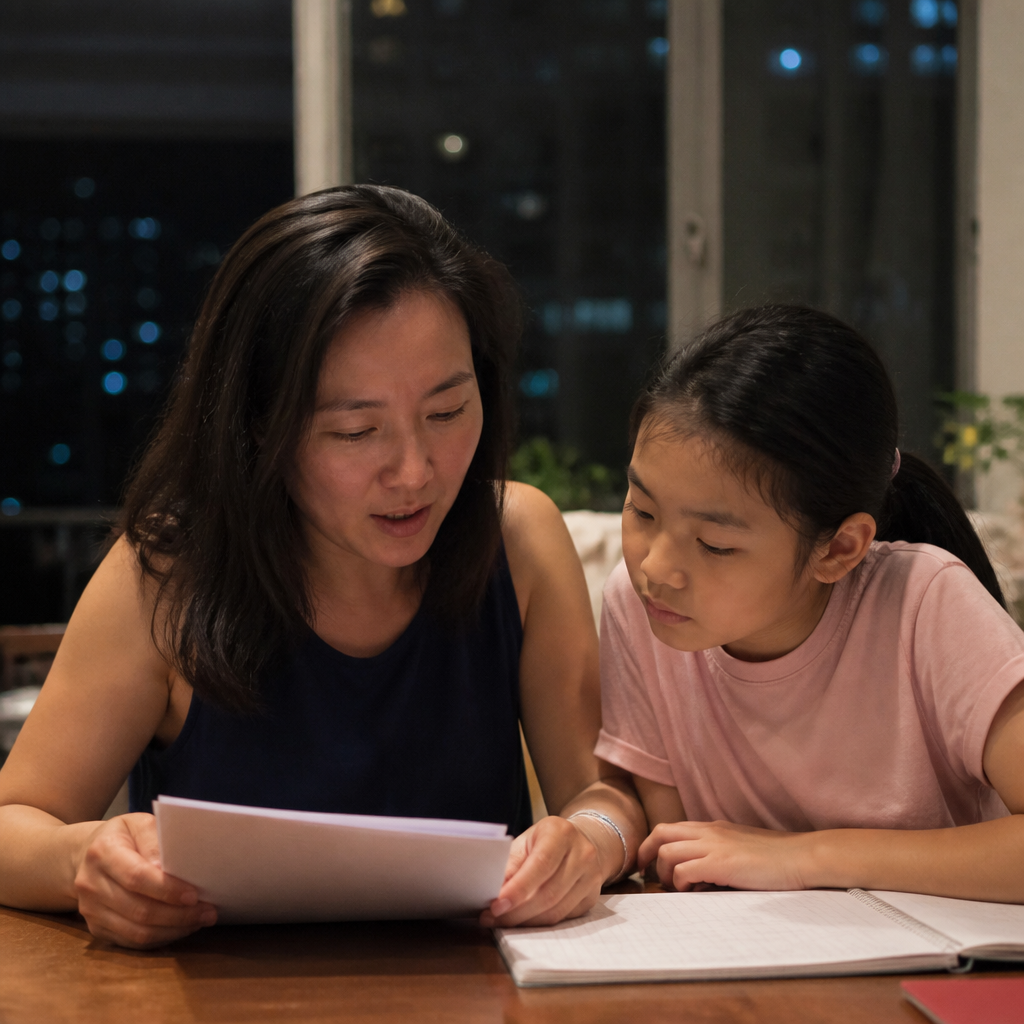
In simple terms, DSA stands for Direct School Admission. It allows certain students to apply to participating secondary schools based on talents and achievements beyond academic results alone. This means a child may secure a place in a school before the usual Secondary 1 posting, subject to meeting the school’s and MOE’s requirements. For many families, the real question is not just what DSA in Singapore means, but whether it is truly the right pathway for their child, and what that choice will mean later.
Key Takeaways
- DSA is talent-based admission. It allows Primary 6 students to apply to some secondary schools based on strengths such as sports, arts, leadership, or specific academic-related domains before the regular Secondary 1 posting process. This gives schools a way to identify students who can contribute in areas beyond exam scores alone.
- Not every child should apply. DSA suits students with genuine, sustained ability and interest, not just a short burst of achievement or a parent’s hope that it gives an admission advantage. A child who has built skill over time is usually in a stronger position than one who is applying mainly because the family feels pressured to “try everything.”
- Acceptance comes with commitment. If your child is admitted through DSA, they are generally expected to continue developing in that talent area in Secondary 1 and beyond, often through a related CCA or school programme. Parents should treat this as a real commitment, not just a way to enter a preferred school.
- DSA is different from regular posting. The key difference between DSA and Secondary 1 posting in Singapore is that DSA happens earlier and is tied to a declared talent area, while regular posting is based mainly on PSLE choices and eligibility. Understanding this difference helps families avoid assumptions that can lead to poor decisions later.
- Shortlisting matters a lot. Looking at school culture, training intensity, travel time, CCA demands, and your child’s temperament is just as important as looking at school names. A school may look impressive on paper but still be the wrong fit for your child’s energy level and personality.
- Timelines can change slightly each year. If you are wondering when to apply for DSA-Sec, always check the latest updates from MOE and individual schools. Dates, talent areas, and selection formats can shift from year to year.
- DSA does not remove the need for academic readiness. Even if a place is secured, the jump to Secondary 1 can still feel big. If your child may need steady academic support while preparing for Secondary 1, learn more about our home tutors who can help build subject confidence and manage the transition without pressure.
What DSA Singapore really means for parents and students
When parents first hear about Direct School Admission, it can sound like a shortcut into a preferred school. That idea is understandable, but it often creates unnecessary pressure. A more accurate way to see DSA in Singapore is this, it is a pathway for children who have shown real strength in specific areas that schools value and want to develop further.
A plain-English definition
Direct School Admission lets participating secondary schools select some students before the normal posting exercise. Selection is based on talent areas, not just PSLE scores. A school might look for a student who has consistently represented the school in a sport, shown strong leadership in prefect roles, built a strong portfolio in visual arts, or demonstrated aptitude in areas like robotics or mathematics.
That does not mean every capable child should try DSA. Tutors often notice that families sometimes apply based on general interest rather than clear fit. Enjoying piano lessons is not the same as being ready for a school’s performing arts demands. Being class monitor once is not the same as standing out in leadership interviews.
Who is most suited for DSA
DSA tends to suit children who show three things together:
- Sustained involvement. This usually means years of training, competition, contribution, or consistent participation. A child who has trained in table tennis since Primary 3 and competes regularly presents a very different profile from one who joined recently.
- Recognisable ability. This may show up in results, teacher recommendations, performances, portfolio quality, auditions, or project work. Schools are not only looking for enthusiasm. They are looking for evidence that the child can contribute meaningfully.
- Real willingness to continue. The school is not just admitting past talent. It is admitting future participation. If your child has already lost interest or feels burnt out, DSA may become a burden rather than an opportunity.
That third point matters more than many parents expect. Some Primary 6 children look impressive on paper but are already tired. If your child is worn down by school, CCA, enrichment, and PSLE revision, DSA can start to feel like one more obligation they did not really choose.
How the DSA-Sec process works
If you are asking how DSA secondary school admission works in Singapore, the broad process is fairly straightforward, even if each school assesses students differently.
The basic flow from application to offer
A typical DSA-Sec journey looks like this:
That is the broad answer to how DSA-Sec works, but the emotional reality is often less tidy. A child may be shortlisted by a school you did not expect and rejected by the one you thought was the best match. Another may perform well during practice but freeze during an audition. Effort matters, but competition level and school fit matter too.
What schools may assess during selection
Schools commonly use different combinations of:

- Trials or physical assessments. For sports like badminton, netball, swimming, or track and field, coaches may observe not just skill, but stamina, discipline, teamwork, and how well a child responds to instruction.
- Auditions. For choir, dance, music, or drama, schools may look at technical ability, stage presence, confidence, and adaptability. A child who responds calmly to feedback can leave a stronger impression than one who performs well but struggles under pressure.
- Portfolio review. This is common for visual arts, STEM, or leadership domains. A strong portfolio usually shows process, consistency, initiative, and growth over time, not just a few polished final pieces.
- Interviews. Schools often use interviews to assess motivation, maturity, communication, and whether the child genuinely understands the commitment involved.
Always check the latest details from MOE and the relevant school websites, because talent areas and selection formats can change.
What schools offer DSA and which talent areas are common
Many parents start by asking what schools offer DSA in Singapore for sports and arts. In practice, the better question is often which schools offer the right talent area in the right environment for your child.
Common DSA talent areas
Secondary schools may offer DSA in areas such as:
- Sports. This can include football, basketball, badminton, track and field, swimming, table tennis, and more. A school may value competition experience, but coaches also notice discipline, consistency, and the ability to train seriously over time.
- Performing arts. Choir, dance, band, orchestra, and drama are common examples. Some schools look for polished performance, while others are more interested in potential and responsiveness to coaching.
- Visual arts. This may include drawing, painting, design, or mixed media work. Strong portfolios often show originality, observation skills, and sustained interest rather than random pieces put together at the last minute.
- Leadership. Schools may assess initiative, service, communication, maturity, and the ability to work with others. Empty buzzwords do not go far in interviews. Real examples from school life matter much more.
- STEM-related domains. Robotics, coding, science research, and mathematics are examples. Some schools want evidence of competitions or projects, while others look for curiosity, problem-solving, and genuine engagement.
Why school culture matters as much as the talent area
A common mistake is to search only by prestige or reputation. That reaction is natural. If your child has one shot at DSA, of course you want a good school. But “good” has to include suitability.
A sporty child who thrives on high-intensity training may do well in a school with a strong competition culture. Another child may be skilled but need a more balanced environment because PSLE stress has already taken a toll. In the arts, some schools are highly performance-driven, while others are more developmental.
So when considering DSA schools in Singapore, do not stop at the talent list. Look at CCA expectations, training frequency, school location, school ethos, and whether your child can realistically sustain the pace after entering Secondary 1.
How to prepare for the DSA application
The DSA Singapore application process for Primary 6 parents can feel intimidating at first, especially when you are already juggling PSLE revision, school notices, and your child’s emotions. In most cases, a simple and calm approach works better than a frantic one.
What to prepare before applications open
Before submitting anything, gather the basics:
- Records of achievements and participation. Competition results, leadership roles, certificates, and relevant school involvement should support a real story about your child’s strengths, not just fill space.
- Portfolio materials, if needed. For visual arts, STEM, or project-based areas, schools often want to see what your child has done over time. A rushed portfolio usually looks exactly like what it is.
- A realistic school shortlist. Choose schools based on talent fit, expectations, and environment, not wishful thinking alone.
- A proper conversation with your child. Some children agree at first because they want to please their parents, then later admit they do not want the commitment. It is better to know that early.
This stage matters more than many parents realise. A common pattern among students is that strong ability gets undermined by weak preparation or unclear presentation. Sometimes the problem is not the child’s talent, but the rushed way the application is put together.
Making school choices without creating more stress
During the application window, families apply through the official DSA-Sec channel. The exact number of choices and mechanics should always be verified through MOE. Schools then review the submissions and decide whom to shortlist.
Try not to let the process turn into a family stress spiral. It is easy to slip into nightly arguments, especially when a parent wants to maximise every chance while the child is already exhausted. A more helpful approach is to keep applications focused and honest. Schools can usually tell when an application has been over-engineered by adults.
If your child is already showing signs of stress about the Secondary 1 transition, steady academic support can sometimes reduce pressure at home. Families who want gentle help building readiness can explore home tuition support here, especially if they want consistency without making DSA the centre of every conversation.
Practical preparation tips for interviews, trials, and auditions
Beyond paperwork, children often need help preparing for the actual selection activities. The goal is not to script them into sounding artificial. It is to help them present themselves clearly and calmly.
For interviews, encourage your child to speak honestly about why they enjoy the talent area, what they have learned from setbacks, and how they hope to continue in secondary school. For sports trials, rest, hydration, and punctuality matter more than last-minute overtraining. For auditions and portfolio reviews, neat organisation and confidence in explaining their work can make a difference.
Parents can support without hovering. A child usually performs better when they feel guided, not micromanaged.
When to apply and what parents should watch for
If you are wondering when to apply for DSA Singapore secondary school places, the short answer is that DSA-Sec usually takes place during your child’s Primary 6 year, before the Secondary 1 posting exercise. Exact windows vary, so always confirm the latest timeline with MOE and schools.
The usual timeline
Although dates change, the rhythm is usually similar each year:
Common timing mistakes to avoid
Some mistakes come up again and again:
- Starting only when the application opens. By then, it may be too late to organise a portfolio properly or think through school fit.
- Assuming every school’s process is identical. One school may want a detailed portfolio, while another may rely more on trial performance or interview responses.
- Ignoring the child’s energy level. A student can be talented and still underperform because they are worn out from months of pressure.
Keep checking official information at MOE, including the DSA-Sec page and the Secondary 1 Posting page. Criteria, dates, and school offerings may change.
DSA vs Secondary 1 posting: the difference parents should understand
The difference between DSA and Secondary 1 posting in Singapore is central to deciding whether this pathway is worth pursuing.
DSA happens before regular posting
DSA is an earlier admission pathway linked to specific talent areas. A child applies to schools offering those domains and may receive an offer based on demonstrated ability and suitability. Regular Secondary 1 posting, by contrast, happens after PSLE results and is based on school choice submission and posting rules under MOE.
In other words, DSA is not simply early posting. It is a separate pathway with different selection criteria and expectations.
How DSA can affect later options
This is where many anxious parents need clarity. If your child accepts a DSA offer and is successfully admitted under the scheme, that can affect participation in the usual posting route. The exact implications should always be checked against current MOE rules, because these details are too important to guess.
What parents often worry about is whether DSA locks in a decision too early. In practical terms, that concern is valid. A child may change emotionally over a few months. A school that sounded exciting in June may feel overwhelming by November. That is why acceptance should never be treated casually.
It helps to ask not just, “Can my child get in?” but also, “Will my child still want this school and this commitment later?”
How to decide if DSA is the right fit
The hardest part is often not the form. It is deciding whether DSA is actually suitable for your child.
Signs DSA may be a good fit
DSA may be suitable if your child:
- Has a clear and sustained strength in a recognised area. This means the talent is visible over time, not based on one recent success.
- Wants to continue that area seriously in secondary school. Interest matters because the school is investing in future participation, not just past achievement.
- Can cope with the likely commitment involved. Training schedules, rehearsals, projects, and travel time all add up.
- Feels energised, not trapped, by the opportunity. A child who lights up when talking about the next stage is sending a very different signal from one who goes quiet whenever DSA comes up.
- Has schools in mind that genuinely match their temperament and interests. Fit matters as much as talent.
Questions to ask before shortlisting schools
When shortlisting, look beyond the brand name and ask:
- What exactly is the school expecting after admission? Parents should understand the real commitment, not assume it will be manageable.
- How intense is the related CCA or programme? Some schools are highly competitive, while others are more developmental.
- Can my child handle the travel time and schedule? A long commute can become draining very quickly once Secondary 1 begins.
- Does the school environment suit my child’s personality? A confident, competitive child may thrive in one setting, while a quieter child may do better in another.
- If the talent area becomes less joyful under pressure, will my child still cope well there? This is an uncomfortable but important question.
Some children thrive in challenge. Others slowly lose confidence when every week feels like a race. Parents usually know this deep down. The hard part is being honest about it, especially when the school name feels attractive.
A balanced way to make the final decision
If you are still unsure, try weighing three things together: talent, commitment, and environment. Talent alone is not enough if the school culture is too intense. A good environment is not enough if your child does not truly want to continue in the talent area. And commitment is hard to sustain if the daily routine becomes exhausting.
A balanced decision usually feels less dramatic than parents expect. It often comes down to choosing the school where your child is most likely to grow steadily, rather than the school that sounds most impressive in conversation.
Frequently Asked Questions
Does DSA mean my child does not need to care about PSLE anymore?
No. Even if your child secures a DSA place, PSLE still matters in the broader transition to Secondary 1. Children also need academic readiness for the school environment they are entering. A DSA offer is not a reason to mentally switch off for the rest of Primary 6.
Can my child apply for DSA if they are interested in an area but have no major achievements?
It depends on the school and the talent area. Some schools look beyond medals and certificates, especially if the child shows genuine potential, strong portfolio work, or coachability. But for highly competitive areas, a lack of sustained evidence can make selection harder.
If my child gets a DSA offer, must they continue in that talent area in secondary school?
In general, schools expect DSA students to honour the commitment tied to the talent area they were admitted for. This is one of the most important things to clarify before accepting any offer, because it affects your child’s day-to-day school life after admission.
Will applying for DSA hurt my child’s chances in the normal Secondary 1 posting process?
Applying on its own does not automatically harm your child. The more important issue is what happens if an offer is made and accepted, because that can affect later posting options. Always check the latest MOE guidance before making a final decision.
Where can I check the most accurate information about DSA-Sec?
Use official sources first, especially MOE, including the DSA-Sec page and the Secondary 1 Posting page. You should also review the websites of individual schools, since talent areas and selection details may differ.
Conclusion
For parents asking what DSA Singapore is, the simplest answer is that it is a talent-based admission pathway for Primary 6 students applying to certain secondary schools before the usual posting exercise. But the real decision is bigger than just understanding the definition. It involves suitability, timing, school culture, commitment, and your child’s emotional readiness.
A good DSA decision is rarely about chasing advantage at all costs. More often, it is about asking whether a school is the right place for your child to keep growing in a talent they genuinely care about, while still coping well with the move to Secondary 1. Keep your research practical, check the latest MOE and school information carefully, and do not rush into acceptance just because an offer feels flattering.
If your child may need steady academic support while preparing for Secondary 1, learn more about our home tutors who can help build subject confidence and manage the transition without pressure. You can also explore more parent resources here.


