


English Oral can feel strangely stressful because it looks simple on paper. Read a passage, answer a few questions, speak clearly. But when your child sits in front of the examiner, everything can change. The voice turns flat, the mind goes blank, and every prepared phrase seems to disappear.
If you have been searching for ways to do well for English Oral in Singapore, you are probably not looking for theory. You want practical help that actually works in the local exam setting.
The good news is that oral skills can improve with focused practice. A child does not need to sound polished or memorised to do well. In fact, students who often perform best sound natural, clear, and genuinely engaged with the topic. Whether your child is preparing for PSLE oral, lower secondary oral, or school-based assessments, the core areas are usually the same: clarity, fluency, pronunciation, relevant ideas, and personal response.

This guide shows you how to strengthen those areas at home and during practice, without making oral revision feel like another weekly battle.
Key Takeaways
- Doing well in English Oral is not about sounding impressive. It is about sounding clear, natural, and relevant. A student who uses simple but accurate English and gives a sincere answer usually scores better than one who recites memorised “good phrases” awkwardly.
- Reading Aloud and Stimulus-Based Conversation need different preparation. Some children read smoothly but freeze when asked personal opinion questions. Others speak well but rush through punctuation during reading. Each part needs its own practice routine.
- Confidence improves when practice feels safe and repeated, not high-pressure. If every home practice becomes a correction session, shy children often speak less. Short, calm sessions tend to work better than long, tense ones.
- Primary and Secondary oral exams share similar expectations, but the depth of response changes. Primary students need clear, relevant, personal answers. Secondary students are often expected to explain ideas with a little more maturity and detail.
- Home practice works best when it mirrors real exam conditions. Timed reading, recording responses, and discussing common Singapore topics like school rules, kindness, technology, exercise, and community issues are more useful than passive memorisation.
- If your child keeps struggling despite effort, targeted support can help. Sometimes a student needs guided feedback from someone outside the family, especially when parent-child practice has become emotionally loaded. You can learn more about our tutors if you want more personalised help.
What Examiners Actually Look For in English Oral
Before drilling practice papers, it helps to know what oral examiners are actually listening for. Many children think oral is about speaking “fancy English”. That misunderstanding creates a lot of unnecessary anxiety.
Clarity matters more than showing off
Examiners want to hear speech that is easy to follow. That means clear pronunciation, sensible pacing, and proper expression. A child who reads, “The boy ran to the bus stop” in a steady, natural voice is doing better than a child who overacts every line and mispronounces half the words.
In many school oral sessions, the same pattern appears again and again. Students underline difficult words and obsess over them, but ignore punctuation. Then they read one whole paragraph in a single breath. Marks often drop not because the child lacks vocabulary, but because the delivery sounds rushed and unclear.
Fluency and relevance are crucial in conversation
For Stimulus-Based Conversation, examiners are not expecting a perfect speech. They are looking at whether the student can respond to the prompt, give relevant ideas, and speak with some ease. A short but thoughtful answer is usually stronger than a long answer that wanders off-topic.
If the picture shows students cleaning a park and the question is about community responsibility, a relevant response might be: “I think taking care of shared spaces is important because everyone uses them. If people litter, the environment becomes unpleasant and unhealthy.” That already sounds much stronger than a memorised answer about “leadership and perseverance” that does not fit the question.
Personal response matters in Singapore oral exams
MOE and SEAB oral formats value the student’s own response. That is why copied model answers often sound unnatural. Examiners want to hear a real opinion, supported by reasons and examples. You can refer to official national exam information at SEAB and broader curriculum guidance at MOE.
A useful mindset is this: the examiner is not trying to trap the student. They are trying to see whether the student can think, respond, and communicate. Once children understand that, they often become less afraid of giving a genuine answer.

How to Score Better in Reading Aloud
Reading Aloud is where many anxious children try to “perform”, and that can backfire. The goal is not to sound dramatic. The goal is to sound like a confident reader who understands the passage.
Mark the passage quickly and meaningfully
During preparation time, children should not try to annotate every line. That usually creates panic. A better habit is to mark only what affects delivery: difficult words, pauses, and places where expression changes.
If the passage includes a question, the voice should reflect that naturally. If there is dialogue or surprise, the tone can lift slightly. A child who marks commas and full stops clearly often improves faster than one who circles ten “difficult” words but still reads flatly.
Practise pace, not just pronunciation
A very common oral mistake in Singapore schools is reading too fast because the child is nervous. The examiner may still understand the words, but the reading sounds breathless and careless. Slowing down even slightly can make a noticeable difference.
Try this at home. Ask your child to read a short paragraph once at normal speed, then once slightly slower with proper pauses. Play both recordings back. Most children quickly hear that the slower version sounds more confident, not weaker.
Work on word stress and sentence meaning
Pronunciation is not only about saying individual words correctly. It also includes stressing the right part of the sentence. The meaning can shift depending on where the stress falls.
“She didn’t forget the homework.”
- This suggests someone thought she forgot it, but she did not.
“She didn’t forget the homework.”
- This suggests she may have forgotten something else, but not the homework.
Oral reading becomes stronger when the child reads for meaning rather than word-by-word survival.
This matters especially for primary school English Oral. Many younger students can decode words, but they do not yet read expressively. What they need is repeated modelling, not scolding.
Build familiarity with common reading problems
Another practical step is to notice patterns. Some children regularly misread words with endings like -ed or -tion. Others drop final consonants, making words sound incomplete. If you can identify two or three recurring issues, practice becomes much more efficient.
Instead of saying “read better”, focus on something specific such as “pause at punctuation” or “pronounce the last sound clearly”. Small targets are easier to improve, and visible progress helps confidence.
How to Answer Stimulus-Based Conversation More Naturally
This is the section that worries many families most. The child can see the picture, but does not know what to say beyond one sentence. The first thing to remember is this: expansion is a trainable skill.
Start with the obvious, then add a reason
Children often freeze because they think their first idea is too simple. Actually, a simple idea is perfectly fine if it is developed.
Weak answer: “Yes, because it is good.”
Better answer: “Yes, I think students should exercise regularly because it helps them stay healthy and reduces stress. For example, after a long school day, even a short walk or game can help them feel more refreshed.”
The structure is natural: opinion, reason, example. No memorised phrase is needed.
Use personal experience when relevant
Examiners often respond well when students connect the topic to real life. That makes the answer sound more authentic and less forced.
If the topic is about helping others, a student might say, “In my school, we sometimes have activities to support community causes. I feel these activities are meaningful because they remind us that small actions can help other people.”
That sounds far more natural than forcing a grand statement into every topic.
Extend your answer without rambling
Some students finally overcome shyness, then go too far in the other direction and lose focus. A useful target is two to four developed points, not endless talking. If the examiner asks a follow-up question, answer it directly before adding new ideas.
This is where many children slip. They memorise content from assessment books, then answer the question they hoped for, not the one they were actually asked. In oral exams, listening matters just as much as speaking.
Prepare for common topic areas
Students do not need scripts, but they do benefit from familiarity with likely themes. In Singapore oral practice, common areas include school life, healthy living, technology, family, community, kindness, environmental responsibility, and good habits.
A simple way to prepare is to discuss one topic at dinner or during a short car ride. Ask: What is your opinion? Why do you think so? Can you give an example? This builds flexible thinking, which is far more useful than memorising full answers.
Practical English Oral Practice at Home for Singapore Families
At 9.30pm on a weekday, after homework, spelling, and maybe CCA, most families simply do not have the energy for a one-hour oral lesson. That is why the best ways to practise English Oral at home are usually short, simple, and repeatable.
Use ten-minute oral routines, not marathon sessions
A short routine often works best.
This is far more sustainable than doing oral revision only in the week before the exam.
Record and review, but gently
Recordings can help children hear what examiners hear. Many are surprised to realise they mumble, rush, or end every sentence with “um”. But the tone of review matters.
If a parent replays every clip just to criticise, confidence drops quickly. A better opening question is, “Which part sounded strongest to you?” That keeps the child involved instead of defensive.
Talk about real-life topics regularly
Oral performance improves when speaking becomes normal at home. Everyday topics work well: school canteen food, screen time, public transport etiquette, recycling, stress, teamwork, neighbourhood kindness. These are close to common oral themes in Singapore.
Families who want more structured support sometimes combine home practice with guided tuition. If parent-child practice keeps ending in frustration, it may help to learn more about our tutors for oral-focused feedback and exam-style practice.
How Primary and Secondary Students Should Prepare Differently
The basics of doing well for English Oral remain similar across levels, but expectations shift as students grow older. That difference matters. Sometimes families accidentally use Primary-style preparation for Secondary students, or expect a younger child to sound too mature.
Primary school oral: clear, simple, personal
For PSLE and primary school oral tasks, examiners usually reward clarity, relevance, and confidence more than sophistication. This is why scoring well in primary school English Oral often comes down to mastering a few essentials properly.
A Primary student answering a question about healthy habits does not need a complex argument. “I think exercise is important because it keeps us healthy and energetic. I enjoy cycling with my family on weekends,” is already a solid response.
What tends to hurt Primary students is not lack of intelligence, but short, undeveloped answers. They stop after one sentence because they think they are done. The fix is simple: train them to add one reason and one example.
Secondary school oral: deeper response and stronger awareness
Secondary students are usually expected to handle broader topics with a little more maturity. Themes may involve social behaviour, technology, responsibility, or values. The student should still sound natural, but the answers need more development.
For instance, on a topic about mobile phone use, a Secondary student can discuss both convenience and distraction. That balance shows thoughtfulness. A flat “Phones are useful” answer may sound underdeveloped.
Many lower secondary students struggle because they still rely on Primary habits: very short answers, limited explanation, and fear of saying the “wrong” thing. They need practice in expanding ideas without becoming robotic.
How to Build Oral Exam Confidence
If your child knows what to say at home but falls apart in front of examiners, the issue may be confidence, not content. That is extremely common. Many families searching for help with English Oral confidence are really dealing with performance anxiety.
Confidence comes from familiarity, not pep talks alone
Telling a child “just relax” rarely works. A more effective method is repeated exposure to oral-like conditions. Sit across the table. Use a timer. Ask the question once. Let the child answer without interruption.
After a few sessions, the setting starts to feel less intimidating. This is especially helpful for children who become stiff the moment an adult says, “Okay, oral practice starts now.”
Shy students need low-pressure speaking opportunities
For shy students, pushing too hard can backfire. Some children need a softer build-up. Start with voice recordings instead of face-to-face speaking. Then move to speaking to one trusted adult. Only later should you simulate full exam conditions.
A shy child who refuses to answer in complete sentences may not be lazy. Very often, the fear is embarrassment. Once they realise they will not be corrected after every word, they usually begin to speak more freely.
Avoid over-correcting small mistakes
Some parents stop children every few seconds: “Not like that”, “Pronounce properly”, “Say a better word”. The intention is good, but the result is hesitation. The child becomes more focused on avoiding mistakes than on communicating clearly.
Pick one target per practice. Maybe today is pacing. Tomorrow is expansion. Confidence grows much faster when correction is focused.
Common Mistakes That Lower English Oral Scores
Sometimes the biggest gains come not from doing more, but from removing habits that are quietly pulling marks down.
Memorising model answers too rigidly
Memorisation feels safe, especially when oral exams are near. But examiners can usually tell when a response is rehearsed and detached from the actual question. Worse, if the student forgets one sentence, the whole answer can collapse.
It is better to prepare topic familiarity and idea banks than full speeches. Know common themes such as school life, health, technology, kindness, the environment, and family, then practise speaking about them naturally.
Giving answers that are too short
A child says, “Yes, I agree because it is useful.” Then silence. This is one of the most common oral weaknesses. The answer is not wrong, but it is too thin to show much thinking.
The fix is repeated habit-building. Every opinion should be followed by “because” and then “for example” where possible. Over time, this becomes more natural.
Sounding too rehearsed or too casual
There is a balance to aim for. Some students sound robotic. Others become so relaxed that they use slang, fillers, and messy sentence structures. The strongest oral responses usually sit in the middle: conversational but respectful, prepared but not scripted.
That balance often separates an average performance from a stronger one.
Frequently Asked Questions
How often should my child practise English Oral each week?
Three to five short sessions a week is usually better than one long session. Even ten to fifteen minutes can be effective if the practice is focused. During the month before the exam, increase the frequency slightly, but do not turn every evening into a stressful oral drill.
What if my child has good ideas but poor pronunciation?
Work on both, but do not neglect content. Pronunciation improves through listening, modelling, and Reading Aloud practice. Ask your child to record short passages and compare them with a clear reading by a teacher or parent. At the same time, continue practising conversation so confidence does not depend only on sounding “perfect”.
How can I help if my child is very shy?
Start small. Let your child record answers alone first. Then listen together and identify one good point. Move gradually to live practice with a familiar adult. For many families, emotional safety is the first step, not more pressure.
Are assessment books enough for oral preparation?
Not really. They are useful for topics and sample questions, but oral is a speaking skill. A child can read many sample answers and still perform poorly if they have not practised saying ideas aloud under mild pressure.
Conclusion
Learning how to do well for English Oral in Singapore is less about finding the perfect phrase and more about building clear, repeatable habits: reading aloud with meaning, answering the actual question, expanding ideas naturally, and practising often enough that confidence can grow.
For Primary students, that often means simple but complete answers. For Secondary students, it means deeper development and more thoughtful personal response. Across all levels, examiners want clarity, fluency, relevant ideas, and a student who sounds genuine rather than memorised.
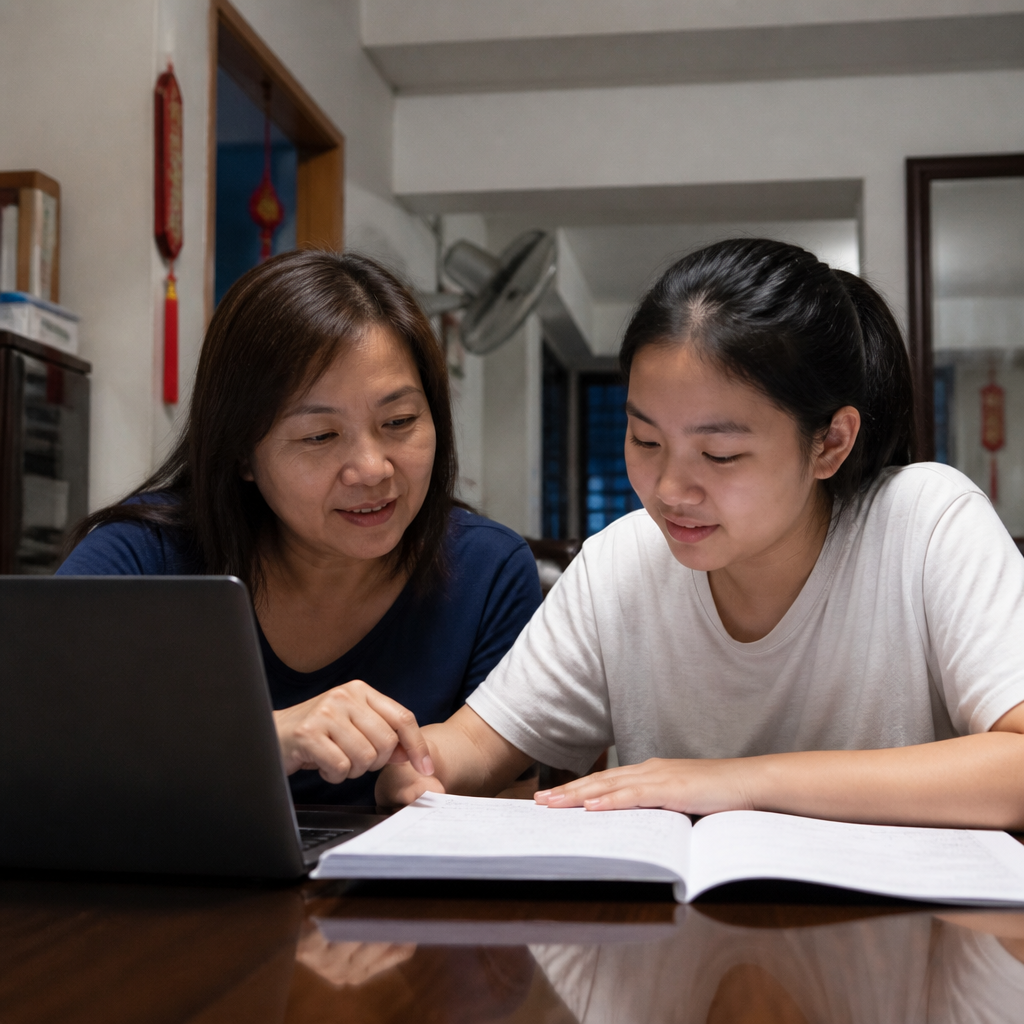
If oral practice at home has become tense, or if your child needs more targeted support in Reading Aloud, Stimulus-Based Conversation, and confidence-building, you can learn more about our tutors. The right guidance can make oral feel far less frightening, and much more manageable.


