When a child starts feeling lost in class, exam season can become emotionally exhausting for the whole family. In many Singapore homes, this scene feels all too familiar. It is 9.30pm, your child is staring at a Science worksheet, eyes watery, and every question seems to confirm the fear that everyone else is somehow ahead. For parents searching for tutor recommendations for stressed students, the real worry is not just marks. It is confidence, motivation, and the growing panic that sets in when a child feels left behind.
This is where the right tuition support
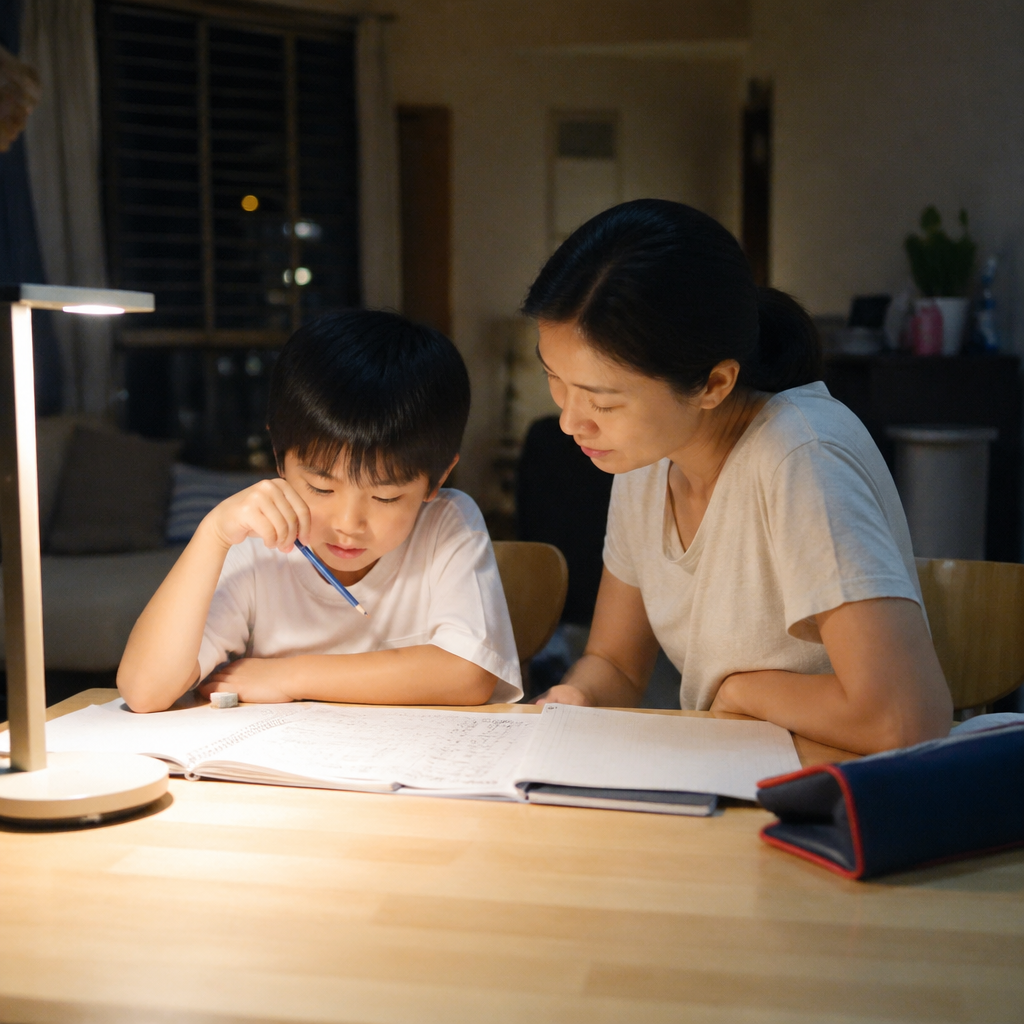
A quiet study moment at home.
can make a real difference. Good tuition does not simply pile on more worksheets. It gives struggling students a calmer pace, clearer explanations, and a safe space to ask questions they were too embarrassed to ask in class. For families looking for academic support for
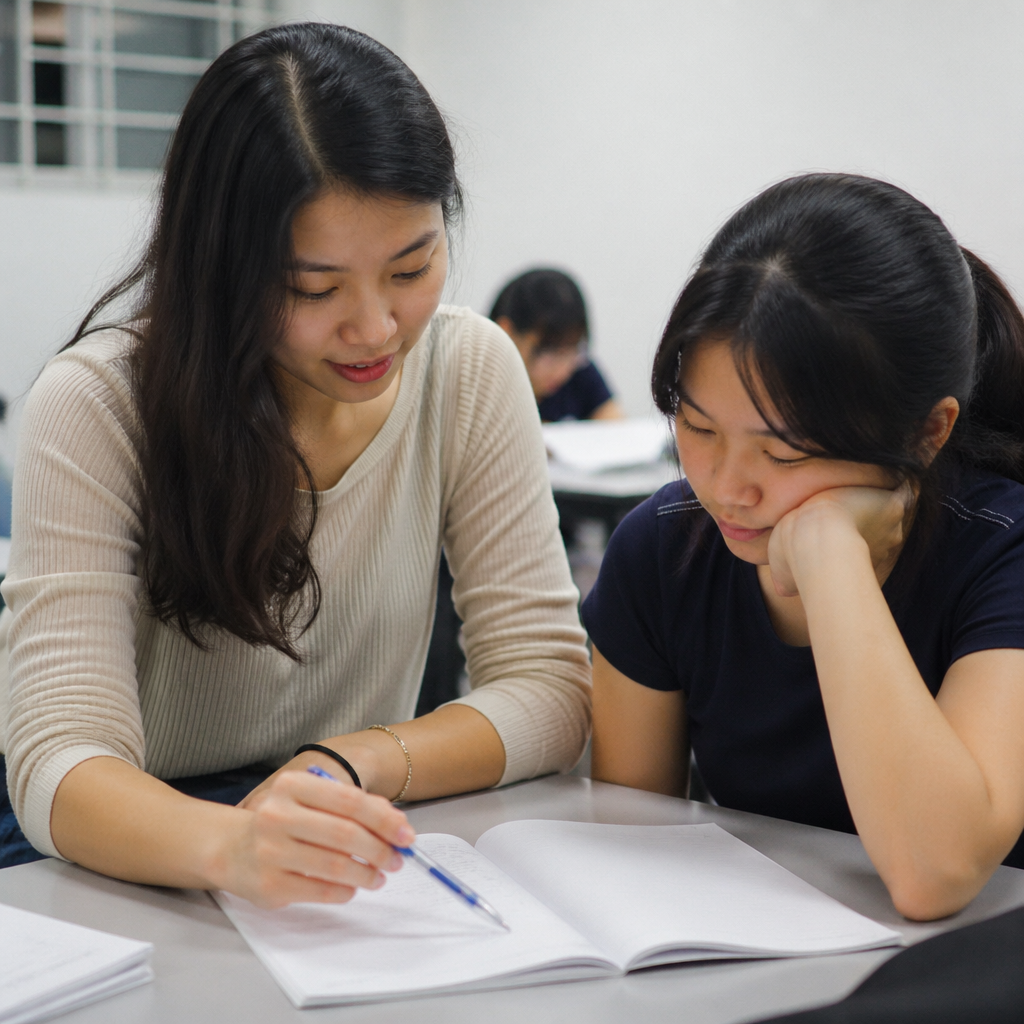
Patient guidance makes a big difference.
struggling students in Singapore, tuition can reduce exam stress by helping children rebuild understanding step by step, before fear turns into avoidance.
2. Key Takeaways
Tuition reduces exam stress when it helps a child understand what is happening in class, instead of just memorising answers. For example, a Primary 4 student who keeps getting fractions wrong may stop panicking once a tutor breaks the topic into visual steps using pizza slices or number bars. When understanding improves, revision feels less threatening and more manageable.
Children who feel left behind often need emotional reassurance as much as academic help. A tutor who says, “Let’s fix one question at a time,” can calm a child far more effectively than repeated reminders to “study harder”. This kind of reassurance helps students stay engaged instead of shutting down.
Personalised tuition is useful for closing learning gaps in primary school because the tutor can identify exactly where confusion began. A child struggling with word problems may actually have missed earlier concepts like multiplication facts or reading key information carefully. Once the real gap is identified, the child can catch up more efficiently.
Exam stress often drops when children experience small wins regularly. If your child used to leave half the worksheet blank but now completes it with guidance, that progress matters. Small improvements build confidence, and confidence makes future revision less overwhelming.
For parents wondering how to help a child catch up in school in Singapore, the right tutor can create a realistic recovery plan without overwhelming the child with extra pressure. A structured plan gives both parent and child a clearer sense of direction.
3. Why Students Who Feel Left Behind Become So Stressed Before Exams
A child who feels behind in class is not just worried about one exam paper. Very often, the stress has been building quietly for weeks or even months. In Singapore’s primary school setting, lessons move quickly. If a student misses one important concept in Math, English, or Science, the next topic can feel even harder. Before long, revision becomes frightening because every chapter reminds the child of what they do not understand.
3.1 Falling behind creates a cycle of panic
When children do not understand in class, they may stop raising their hands because they are afraid of looking slow. Then they go home with only half an understanding, struggle with homework, and walk into the next lesson even more confused. By the time exams are near, they are not revising with confidence. They are trying to patch holes while already feeling ashamed and tired.
For example, a Primary 5 student may struggle with model drawing. In class, the teacher moves on after one explanation. At home, the child freezes when faced with similar questions and starts saying, “I hate Math.” The real issue is not laziness. It is the stress that comes from being confused again and again, until the subject itself starts to feel scary.
3.2 Stress shows up in ways parents may not expect
Some stressed students cry openly. Others become quiet, irritable, or resistant. A child may suddenly complain of stomach aches before school, take two hours to finish a short piece of homework, or mutter “never mind” every time you offer help. Sometimes they sharpen their pencil three times, stare at the page, and insist they are “thinking” when they are really overwhelmed. These are often signs that the child feels defeated.
This is why parents searching for tutor recommendations for stressed students are usually looking for more than academic coaching. They want someone who can help their child feel capable again, especially before exam stress turns into a deeper confidence problem.
4. How Tuition Reduces Exam Stress for Stressed Students
The right tuition support reduces stress because it changes the learning experience itself. Instead of constantly feeling rushed or lost, the child gets a second chance to understand the same material in a calmer, more personal way.
4.1 Tuition slows the pace to match the child
In school, teachers have to move according to the class schedule. A tutor can pause, repeat, and rephrase until the child truly understands. This matters a lot for students who need more processing time or who get flustered when they feel they are the only one not following.
For instance, if your child does not understand how to identify clue words in English comprehension open-ended questions, a tutor can spend 20 minutes on just that one skill. In school, there may only be a few minutes before the class moves on. That extra time can be the difference between panic and clarity.
4.2 Tuition gives children a safe place to ask “basic” questions
Many children feel embarrassed asking questions in front of classmates. A tutor creates a private setting where they can admit, “I still don’t get it.” That honesty is powerful because it allows the tutor to address the real issue instead of assuming the child understands.
For example, a student may appear weak in Science revision, but the deeper problem is that the child does not understand key vocabulary like “absorb”, “dissolve”, or “condense”. Once these basics are explained clearly, the child often becomes less fearful during revision because the topic no longer feels like a blur of unfamiliar words.
4.3 Tuition replaces helplessness with a plan
Exam stress feels worst when a child thinks, “There is too much to fix.” A good tutor breaks this into manageable steps. Week 1 might focus on multiplication tables. Week 2 might focus on word problems using those same facts. Week 3 might revisit mistakes and strengthen weak spots. This structure helps children feel that improvement is possible, not impossible.
That is why many parents seeking academic support for struggling students in Singapore find that tuition reduces stress not by removing difficulty, but by making progress feel achievable.
4.4 Tuition can improve revision habits at home
Another reason tuition helps is that it often changes what happens outside the lesson. A child who used to avoid revision may become more willing to review notes when they actually understand the topic. Tutors can also show students simple ways to revise, such as grouping mistakes by topic, using short timed practice, or reviewing corrections before attempting new questions. These habits make exam preparation feel more organised and less chaotic.
5. How a Good Tutor Identifies and Closes Learning Gaps in Primary School
One major reason tuition helps is that it targets the actual gaps causing the stress. A child may seem weak in an entire subject, but often the problem starts with a few missing building blocks that were never fully understood.
5.1 The tutor looks backward, not just forward
Simple tools for focused revision.
A good tutor does not simply drill exam papers immediately. Instead, the tutor checks what the child has missed from earlier topics. This is essential for closing learning gaps in primary school.
For example, if a Primary 3 student struggles with division, the tutor may discover weak multiplication recall. If a Primary 6 student cannot handle synthesis and transformation, the issue may be shaky grammar foundations from earlier years. By fixing the earlier gap, the child becomes less stressed about current work because the present topic finally starts to make sense.
5.2 Lessons become more targeted and less overwhelming
When support is targeted, the child no longer feels like everything is wrong. That shift matters emotionally. Imagine a child who says, “I’m bad at Math.” After a few sessions, the tutor identifies that the main problem is fractions comparison. Suddenly the challenge feels specific, and that makes it easier to tackle.
This also helps parents. Instead of hearing only “your child needs to work harder,” you get a clearer picture of what is actually happening. That makes it easier to support your child at home without turning every homework session into a tense back-and-forth.
For families asking how to help a child catch up in school in Singapore, this targeted approach is often the turning point. It stops random practice and starts meaningful recovery.
6. What Tuition Looks Like When the Goal Is to Reduce Stress, Not Add More Pressure
Not all tuition reduces stress. If lessons are too rigid, too fast, or too focused on constant correction, a child may feel even worse. The right kind of tuition for stressed students balances academic progress with emotional safety.
6.1 The tutor builds confidence through small wins
A good tutor chooses tasks that stretch the child without crushing them. This could mean starting with 5 manageable questions instead of 20, or revising one topic thoroughly before moving on. These small wins tell the child, “I can do this,” and that message matters more than many parents realise.
For example, a Primary 4 student who used to shut down during Chinese spelling revision may respond better when the tutor first reviews ten familiar words, then adds five new ones. Success creates momentum. Momentum reduces stress because the child begins to associate study time with progress rather than failure.
6.2 The tutor notices emotional signals
Children do not always say, “I’m overwhelmed.” Sometimes they fidget, go silent, keep asking for water, or say they are tired when the real issue is anxiety. A sensitive tutor adjusts the session. This might mean switching from timed practice to guided discussion, or revisiting a simpler example before returning to the harder one.
That emotional awareness is especially important during exam periods. At that stage, children are not just learning content. They are also managing fear, self-doubt, and pressure from seeing classmates appear more prepared.
Parents looking for tutor recommendations for stressed students should therefore look for someone who can teach patiently, not just someone who can finish worksheets quickly.
6.3 The tutor keeps correction constructive
The way mistakes are handled matters. If every wrong answer is met with frustration, the child may become even more anxious. A good tutor corrects clearly without making the child feel judged. Phrases like “Let’s see where this went off track” or “You got the first step right; now let’s fix the next part” help children stay engaged. Over time, this teaches them that mistakes are part of learning, not proof that they are failing.
7. How to Help a Child Catch Up in School in Singapore With the Right Tuition Setup
Parents often ask whether one lesson a week is enough, whether home tuition is better, and how to avoid overloading an already tired child. The answer depends on the child’s stress level, learning gaps, and school schedule.
7.1 Choose a pace your child can sustain
If your child is already exhausted, adding too many tuition sessions can backfire. A calmer, consistent routine is usually better than an intense short-term push. For example, one or two focused sessions a week may help more than four rushed sessions that leave the child dreading every afternoon.
The goal is not to fill every free slot. It is to create enough support for progress without making the child feel that life has become one long remedial programme. A sustainable routine also makes it easier for the child to absorb what is taught instead of simply surviving each session.
7.2 Match the tutor to your child’s temperament
A child who is shy and easily discouraged may need a warm, gentle tutor. A child who gets distracted may benefit from someone structured and engaging. Subject knowledge matters, but personality fit matters too.
This is especially relevant for parents searching how to help a child catch up in school in Singapore. If the tutor’s style does not fit the child, even good teaching may not lower stress. But when the match is right, the child may start saying things like, “Can we try one more question?” or “This one is actually okay.” That is often a strong sign that anxiety is easing.
7.3 Focus on progress, not instant transformation
A child who has felt behind for months will not become confident overnight. But if homework time becomes less tearful, if your child starts attempting more questions independently, or if pre-exam revision no longer ends in panic, those are meaningful signs that tuition is working.
Parents sometimes look only at test scores, but emotional changes matter too. A child who is willing to try, ask questions, and stay calm during mistakes is often on the right path academically as well.
8. What Parents Should Look for When Seeking Tutor Recommendations for Stressed Students
When your child is already overwhelmed, the wrong tutor can make things worse. This is why choosing carefully matters.
8.1 Look for diagnostic teaching, not just drilling
A tutor should be able to explain what your child is struggling with and why. If the approach is only “do more papers”, stress may increase because the child is practising without understanding and repeating the same mistakes.
A better sign is when the tutor says something specific, such as, “Your child’s problem with Science open-ended questions seems linked to weak keyword interpretation,” or “The main gap is place value, which is affecting problem sums.” That level of clarity usually leads to better support.
8.2 Ask how the tutor handles anxious moments
This question matters more than many parents realise. If your child freezes during difficult questions, what will the tutor do? A thoughtful answer might include breaking questions into smaller parts, modelling the first step, or pausing to rebuild confidence before continuing.
These strategies matter because anxious children often need help re-entering the task, not just hearing the correct answer. A tutor who understands this can prevent one hard question from derailing the whole lesson.
8.3 Prioritise communication with parents
Good tuition should help parents understand progress without creating more stress at home. Brief updates like “we worked on fractions comparison today, and your child improved after using visual methods” are helpful because they show both effort and direction.
For families looking for academic support for struggling students in Singapore, this kind of communication can be reassuring. It tells you your child is not just being supervised, but truly supported. It also helps parents reinforce the same methods at home in a calmer way.
9. Frequently Asked Questions
9.1 How do I know if my child’s exam stress is caused by falling behind in class?
Look for patterns such as repeated confusion over homework, avoidance of certain subjects, or comments like “everyone else understands except me.” If your child becomes especially upset when revising topics already taught in school, that often suggests learning gaps rather than simple exam nerves.
9.2 Can tuition really help if exams are already near?
Yes, if the tuition focuses on the most important gaps first. A tutor may not fix everything immediately, but even short-term clarity in a few key topics can reduce panic. For example, understanding one weak Math topic before the paper can help a child walk into the exam feeling less helpless.
9.3 Will tuition make my child feel even more pressured?
It can, if the tuition is too intense or poorly matched. But well-paced, personalised tuition often does the opposite. It gives the child a calmer environment to learn, ask questions, and rebuild confidence.
9.4 Is home tuition better for stressed primary school students in Singapore?
For many children, yes. Learning at home can feel safer and less tiring, especially after a long school day. It also saves travel time, which matters when your child is already mentally drained. If you are comparing options, you can also explore your provider’s home tuition services to see what setup suits your child best.
9.5 What is the first step if I want help for my child?
Start by identifying the biggest pain point. Is your child crying over Math homework, freezing during English revision, or losing confidence across multiple subjects? From there, you can look for a tutor who has experience with that exact challenge and can provide targeted support. It may also help to read guidance from trusted education sources such as Singapore’s Ministry of Education for broader academic support information.
10. Conclusion
When a child feels left behind in class, exam stress is rarely just about the exam itself. It is about confusion that has been building quietly, confidence that has been shrinking, and the fear of trying again only to feel lost all over again. The right tuition support can interrupt that cycle. It can slow things down, identify the real gaps, rebuild understanding, and give children the emotional breathing room they need to learn without panic.
For parents searching for tutor recommendations for stressed students, the goal is not simply to push for better marks. It is to help your child feel steady, supported, and capable again. We hope this article has given you a clearer picture of how tuition reduces exam stress for students who feel left behind in class. If you’re looking for specific help for a stressed primary school child who needs patient, personalised support, our tutors at MindFlex are experienced, carefully matched to each student, and ready to help. Contact us for a free consultation and let us find the right tutor for your child.
Our home tuition rates are constantly updated based on rates quoted by Home Tutors in Singapore. These market rates are based on the volume of 10,000+ monthly tuition assignment applications over a pool of 30,000+ active home tutors.