


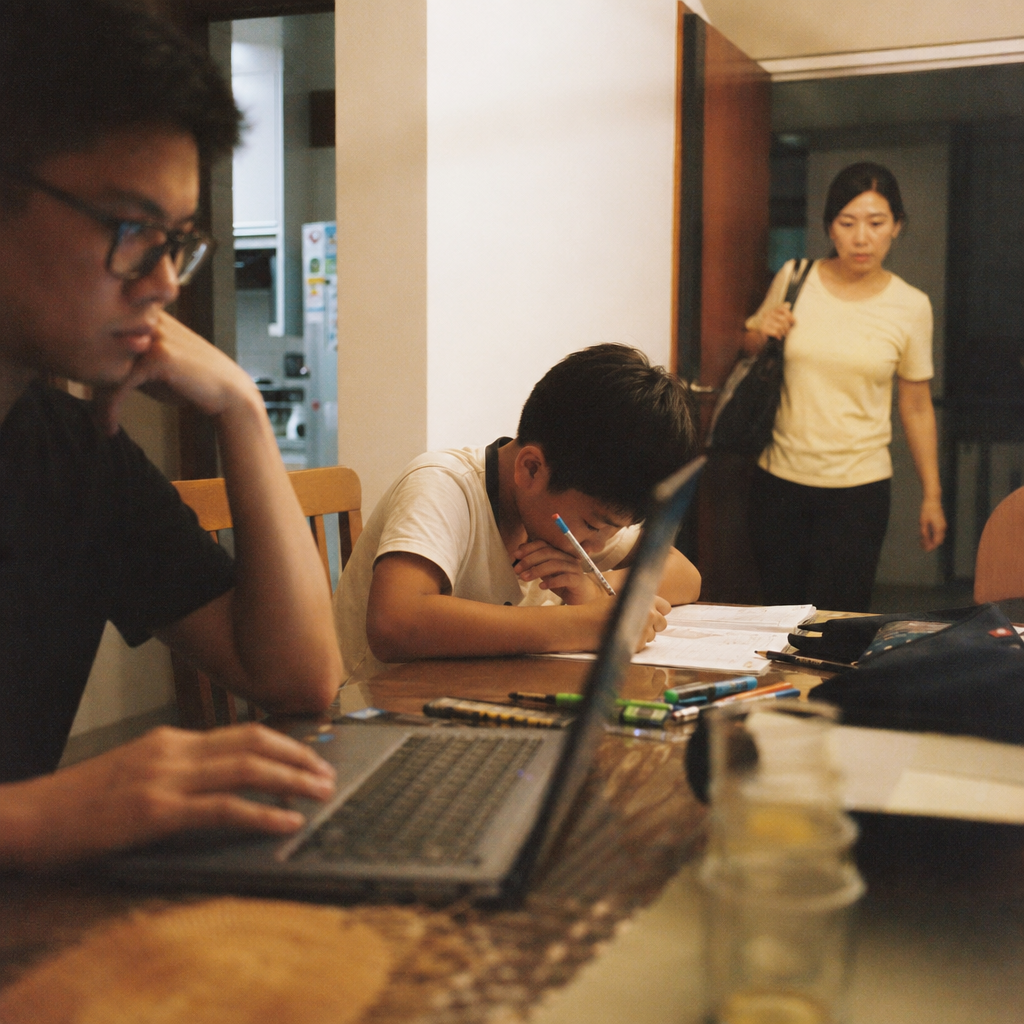
PSLE year can feel especially intense in a dual-income household. One parent is still replying to office messages at 9pm, the other is rushing home after a late meeting, and your child is sitting at the dining table, half-finished with Science open-ended practice and already looking tired. In many Singapore homes, PSLE preparation is not just about getting more assessment books or booking tuition. It is about making the whole week work when both parents are stretched for time.
If that sounds familiar, you are not alone. Many working parents are trying to support revision, monitor school deadlines, manage enrichment or tuition, and still keep family life steady. The good news is that PSLE preparation does not need to depend on one parent being constantly available. With a realistic routine, a clear division of responsibilities, and the right academic support, your child can prepare well without the household feeling like it is in crisis mode every night.
Key Takeaways
- A strong PSLE preparation plan for dual-income families should focus on consistency, not perfect daily supervision. Children usually benefit more from a routine they can follow every week than from occasional long revision sessions that are hard to sustain.
- A practical PSLE study schedule for working parents needs to match actual work hours, commuting time, and your child’s energy levels. Plans that ignore real family constraints often fall apart quickly, especially during busy work periods.
- Good time management for PSLE students in Singapore works best when revision blocks are short, specific, and linked to clear goals. Children are more likely to complete “two ratio questions and corrections” than a vague instruction to “study Math”.
- Balancing work and child exam preparation becomes easier when parents split roles instead of both trying to do everything. Clear responsibilities reduce confusion and help the household run more smoothly.
- A stable home study routine for primary school students helps children know what to do even when parents are not home yet. Predictability reduces procrastination and makes independent revision more realistic.
- Effective parent support strategies for PSLE preparation often include outside help such as tuition, especially for content-heavy subjects, weak topics, or exam technique that is hard to coach consistently at home.
- 30 minutes of school homework, followed by checking instructions carefully. For instance, your child completes English editing and circles any questions they are unsure about for later review with you.
- 30 to 45 minutes of one focused PSLE subject task. This could be one Math problem set, one Science concept review, or one Chinese comprehension passage, depending on the week’s priorities.
- 15 minutes of corrections. This is where learning often happens, especially if your child writes down why an answer was wrong instead of just changing it.
- Upcoming school tests or weighted assessments, so both parents know when to increase revision for a subject.
- Topics already revised, which prevents unnecessary repetition and helps identify gaps.
- Mistakes that need follow-up, such as repeated errors in fractions, inference questions, or Science keywords.
- Tuition homework, so it does not get forgotten or rushed at the last minute.
- Teacher feedback, which often points to the exact skills that need attention.
- Arrive home and have a snack, so hunger does not become a distraction during revision.
- Rest for 20 to 30 minutes, which gives your child time to reset after school.
- Complete school homework first, so urgent tasks are not left hanging.
- Begin one assigned revision task, using the checklist prepared earlier.
- Pack the school bag before dinner, which reduces last-minute stress the next morning.
- Identify weak areas clearly, for example, “your child knows the concept but misreads keywords in Science questions”, so you know what is actually being addressed.
- Give manageable follow-up tasks instead of overwhelming homework, which helps your child stay consistent.
- Update parents efficiently, especially if you cannot sit in during lessons, so you remain informed without needing long calls.
- Align with school pace and exam demands, which keeps tuition relevant to what your child is facing in class.
1. Why PSLE preparation feels harder in a dual-income household
For many families, the hardest part of PSLE preparation is not motivation. It is logistics. When both parents are working, the school day does not end with a parent ready to supervise revision at 3pm. Instead, there may be student care, grandparents, a helper, or simply a child spending the late afternoon alone before adults get home. That gap matters because PSLE revision usually needs structure, not just good intentions.
1.1 The evening crunch is real
In a dual-income household, the most stressful window is usually between 7pm and 10pm. Dinner has to happen. Homework still needs checking. There may be spelling, composition corrections, topical Math revision, and reminders about a Science worksheet due the next day. If your child also has tuition on certain evenings, the week can start to feel packed from end to end.
This is where many parents feel guilty. They want to be present, but they are exhausted. Your child may also be tired from a full school day. A Primary 6 student who was willing to revise fractions at 5pm may be close to tears by 9pm. When this happens again and again, families may mistake fatigue for laziness, when the real issue is that the schedule no longer suits the child’s energy.
1.2 Why generic study advice often fails working parents
A lot of study advice assumes a parent is available every afternoon to supervise revision, test oral reading, mark corrections, and prepare extra practice. That is not realistic for many Singapore families. A useful plan for balancing work and child exam preparation has to fit around real office hours, transport time, and family responsibilities.
For example, if both parents regularly reach home after 8pm, a plan that depends on two hours of nightly parent-led revision is likely to collapse by the second week. A better system is one that still works on the busiest Wednesday of the month, not just on a calm Sunday. Sustainable routines are what carry a child through the long PSLE year.
2. Building a realistic PSLE preparation routine for working parents
A good PSLE study schedule for working parents should not just look neat on paper. It needs to be something your family can actually keep up for months. In PSLE year, consistency usually beats intensity. Three focused revision blocks each week are often more effective than ambitious daily plans that keep getting postponed.
2.1 Start with your family’s actual timetable
Before setting targets, map out the week honestly. Note school hours, CCA if any, tuition slots, commute times, dinner, and bedtime. Then identify the windows when your child is most alert. Some children can manage a productive 45-minute revision block before dinner. Others do better early in the morning on weekends, when the house is quieter and they are less drained.
For example, if your child returns from school at 2pm and you get home at 7.30pm, you may decide that 4pm to 5pm is independent revision time, while 8.15pm to 8.45pm is parent review time. That is far more manageable than trying to squeeze everything into one long night session. A realistic timetable also makes it easier

to protect sleep, which is often the first thing families sacrifice during PSLE preparation.
2.2 Use subject-based planning, not vague study time
“Study for PSLE” is too broad for a tired child. A better home study routine for primary school students breaks revision into clear tasks. Instead of writing “Science revision”, write “2 open-ended questions on heat” or “review mistakes from last Math worksheet”.
This matters because children in Primary 6 often lose momentum when they do not know where to start. If they sit down at the table and see a simple checklist, they are much more likely to begin on their own, even before you are home. Specific tasks also help parents review progress quickly, which is especially useful in dual-income households where time is limited and every evening feels short.
2.3 Keep weekday sessions short and purposeful
For busy households, weekday revision should usually be compact. A sample weekday structure could look like this:
Short sessions help with time management for PSLE students in Singapore, especially when children are already mentally tired after school. They also make it easier for parents to step in for review without turning every evening into a marathon.
3. How to divide responsibilities when balancing work and child exam preparation
One reason balancing work and child exam preparation feels overwhelming is that many parents are working hard but not in a coordinated way. One parent may assume the other is checking the Math file. The other assumes oral practice has already been done. By Thursday, everyone is frustrated, and your child is caught in the middle.
3.1 Assign roles based on strengths and schedules
You do not need both parents doing everything. In fact, that often creates confusion. One parent can handle academic tracking, while the other manages logistics and emotional support. For example, Mum may be better at reviewing English compositions, while Dad may be more comfortable checking Math corrections or planning weekend revision.
If one parent travels frequently or has unpredictable hours, assign that parent tasks that can be done flexibly. A quick video call to test Science keywords or listen to oral reading can still be meaningful, even if they are not home. The goal is not equal time, but dependable support that your child can count on.
3.2 Create one shared tracking system
A simple shared note on your phone can reduce a lot of stress. Track:
For example, if your child’s school teacher says inference questions are weak in English comprehension, both parents should know that this is now a priority. Without a shared system, one parent may keep drilling vocabulary while the actual issue remains untouched.
3.3 Protect one weekly parent-child check-in
Even in a packed week, set aside one fixed slot, perhaps Sunday evening, for a 20-minute review. This is not for scolding. It is for resetting the week. Ask what felt difficult, what was completed, and what needs help.
This kind of check-in is one of the most practical parent support strategies for PSLE preparation because it prevents small problems from snowballing. A child who quietly did not understand ratio for two weeks can suddenly appear careless, when the real problem was that no one realised clarification was needed.
4. Creating a home study routine for primary school students when parents are not always home
A strong home study routine for primary school students is especially important in dual-income families because your child may need to begin work independently before either parent returns. The goal is not to make your child fully self-managing overnight. The aim is simply to reduce wasted time and uncertainty.
4.1 Make the after-school routine predictable
Children cope better when the sequence is fixed. For example:
This routine may sound simple, but it removes decision fatigue. A child who knows exactly what happens at 4pm is less likely to drift into videos or endless snacking while waiting for a parent to come home.
4.2 Prepare the study environment in advance
If every revision session begins with searching for worksheets, sharpened pencils, correction tape, and login details, valuable time disappears. Set up a clear study basket or shelf with current subject files, stationery, and a weekly task list.
For example, if your child has Tuesday Math revision, place the topical worksheet and worked examples on the table before you leave for work in the morning. That small step can make independent study more likely. It also lowers resistance because the child does not have to figure out what to do next when they are already feeling tired.
4.3 Build in accountability without constant hovering
Not every child needs a parent physically present to stay on task. Some just need a system. You can ask your child to send a photo of completed work by 6pm, or leave sticky notes on questions they want help with later. If there is a helper or grandparent at home, their role does not need to be academic. They can simply make sure the child starts on time and sticks to the routine.
This approach supports time management for PSLE students in Singapore without turning the home into a high-pressure environment every day. It also helps children build independence, which becomes increasingly important as exam demands increase.
5. When tuition becomes a practical part of PSLE preparation
In many dual-income households, tuition is not just about chasing top marks. It is often a practical support system. When parents have limited time, a good tutor can provide structure, targeted teaching, and accountability that would otherwise be difficult to sustain at home.
5.1 Tuition can fill specific gaps, not replace parents
The most useful tuition arrangement is one that solves a real problem. Maybe your child understands concepts but struggles with exam technique. Maybe Science open-ended answers are too vague. Maybe Math is generally fine, but problem sums are weak. Tuition works best when it is targeted and tied to an actual need.
For example, if your child keeps losing marks in synthesis and transformation, a tutor can focus on repeated practice and error patterns, while you use your evening time for lighter review and encouragement instead of reteaching grammar from scratch. This makes PSLE preparation more efficient for the whole family.
5.2 It can reduce household tension
Sometimes the issue is not content, but conflict. A child may resist correction from a parent but respond better to a tutor. This is common, especially when everyone is tired and patience is wearing thin. If every revision session ends in tears at the dining table, outside academic support can help protect the parent-child relationship.
That matters in PSLE year. Your child still needs you as a calm base, not only as the person who checks mistakes. For many families, tuition helps separate academic drilling from emotional support, so home does not feel like a constant battleground.
5.3 What to look for in a tutor for working families
For dual-income parents, reliability and communication matter as much as subject knowledge. Look for a tutor who can:
If you are considering support, you can learn more through our About page or reach out directly via our Contact page.
6. Parent support strategies for PSLE preparation that do not require hours every night
Many parents think good support means sitting beside their child for long stretches. In reality, some of the best parent support strategies for PSLE preparation take only a few minutes but still make a real difference.
6.1 Focus on review, not constant supervision
If your child has a clear task list, your role can shift from watching them study to reviewing what was done. A 15-minute check can be enough to spot whether corrections were meaningful, whether careless mistakes are repeating, or whether a topic needs more help.
For example, instead of redoing an entire worksheet with your child, ask them to explain two wrong answers. If they cannot explain the correction, that tells you the concept is still shaky. This is a more efficient use of limited evening time, especially after a long workday.
6.2 Use car rides and meal times well
Working parents often underestimate how useful small pockets of time can be. On the drive to school, you can test Science keywords or Chinese oral topics. During dinner, ask your child what one difficult question from the day was and how they solved it.
These mini-conversations support PSLE preparation without requiring extra formal study hours. They also help you stay connected to your child’s learning, even on busy days. Over time, these short check-ins can reveal patterns that need more attention.
6.3 Watch for burnout, not just marks
A child in PSLE year can look lazy when they are actually overloaded. If your usually steady child starts snapping over simple corrections, staring blankly at worksheets, or taking unusually long to finish basic tasks, the schedule may need adjusting.
A strong plan includes rest. One evening

off each week, a lighter Friday, or a Sunday afternoon break can help your child return to revision with better focus. Sustainable effort matters more than pushing until everyone is miserable. For broader guidance on the PSLE and curriculum expectations, parents can refer to the Ministry of Education Singapore.
7. Frequently Asked Questions
7.1 How many hours a day should a Primary 6 child study for PSLE in a dual-income household?
There is no single number that works for every child. On school days, many children do well with 45 to 90 minutes of focused revision outside homework, depending on their stamina and tuition load. The key is quality. A tired child forcing through three hours at night may learn less than a child doing one focused hour with proper corrections.
7.2 What is the best PSLE study schedule for working parents?
The best PSLE study schedule for working parents is one built around your actual week. Most families benefit from shorter weekday sessions and more substantial weekend review. For example, weekdays can focus on homework, one revision task, and corrections, while weekends cover timed practice papers, oral practice, or topic revision.
7.3 Should both parents be equally involved in PSLE preparation?
Not necessarily. Equal involvement is less important than clear involvement. One parent may handle academic review while the other manages scheduling, emotional support, and communication with tutors. A divided but coordinated approach usually works better than both parents trying to do the same things.
7.4 When should we consider tuition for PSLE?
Consider tuition when your child has persistent weak areas, when home revision regularly leads to conflict, or when your work schedule makes consistent academic support difficult. In a dual-income household, tuition can provide structure and targeted help that reduces stress for both parent and child.
8. Conclusion
Managing PSLE preparation in a dual-income household is rarely about doing more. It is about building a system that fits real life in Singapore, especially when both parents are working and evenings are short. A realistic routine, a clear division of responsibilities, and practical support can make a big difference. Whether you are trying to create a better home study routine for primary school students, improve time management for PSLE students in Singapore, or work out balancing work and child exam preparation without nightly battles, the goal is the same: steady progress without burning out the whole family.
If you are looking for targeted academic support and a tutor who can work around your family’s schedule, our tutors at MindFlex are experienced, carefully matched to each student, and ready to help. Visit our Contact page to arrange a free consultation and find the right tutor for your child.


