


When parents in Singapore consider one to one tuition, one of the biggest hopes is simple: their child can finally learn at a pace
that feels manageable. In a classroom, teachers do their best, but they still need to move according to the needs of 30 or 40 students. That can be hard on a child who needs more time to grasp fractions, composition writing, or Science open-ended questions. It can also frustrate a child who understands the topic quickly and feels restless going through the same type of question again and again.
This is where one to one tuition can make a real difference. A tutor can slow down, speed up, reteach, or stretch a lesson based on the child sitting right in front of them. For parents who are unsure about private tuition, the key question is not just whether tuition helps, but how teaching methods can be adjusted to suit different learning speeds without making the child feel pressured or left behind. This guide explains how that works in real life.
Key Takeaways
- One to one tuition allows lessons to move at your child’s actual pace. If your child needs 20 extra minutes on algebraic manipulation, the tutor can stay there instead of rushing to the next chapter just because the class has moved on. This helps reduce panic and gives the child time to understand properly before new content is introduced.
- Good tutors first diagnose why a child is slow or fast in a topic. A child may not be “weak in Math” overall, but may specifically struggle with translating word problems into equations. Identifying the exact bottleneck makes tuition more efficient and prevents unnecessary drilling.
- Effective one to one tuition teaching strategies include breaking tasks down, adjusting question difficulty, and changing explanation styles. For example, a tutor may use diagrams for a visual learner but oral step-by-step discussion for a child who processes better through conversation. The method changes so the child can access the same concept more comfortably.
- Adapting lessons to student ability does not mean making work easier all the time. It means making work appropriate, so the child is challenged without feeling overwhelmed. A well-paced lesson should stretch the student while still feeling achievable.
- In Singapore, a personalised teaching approach Singapore parents value often includes alignment with MOE syllabi, school exam formats, and the child’s current classroom demands. This matters because tuition should support school performance, not drift too far from what the student is expected to handle in class and exams.
- The best results usually come when tutor, parent, and student understand the child’s individual learning pace in students and respond consistently. That might mean fewer topics covered per session at first, but stronger understanding over time. In many cases, slower but steadier progress leads to better long-term results.
Why Learning Speed Matters So Much in One-to-One Tuition
Every child processes information differently. Some can hear an explanation once and apply it almost immediately. Others need the same idea explained in two or three ways before it clicks. In school, both children may sit through the same lesson, complete the same worksheet, and prepare for the same test. But their experience of learning is completely different.
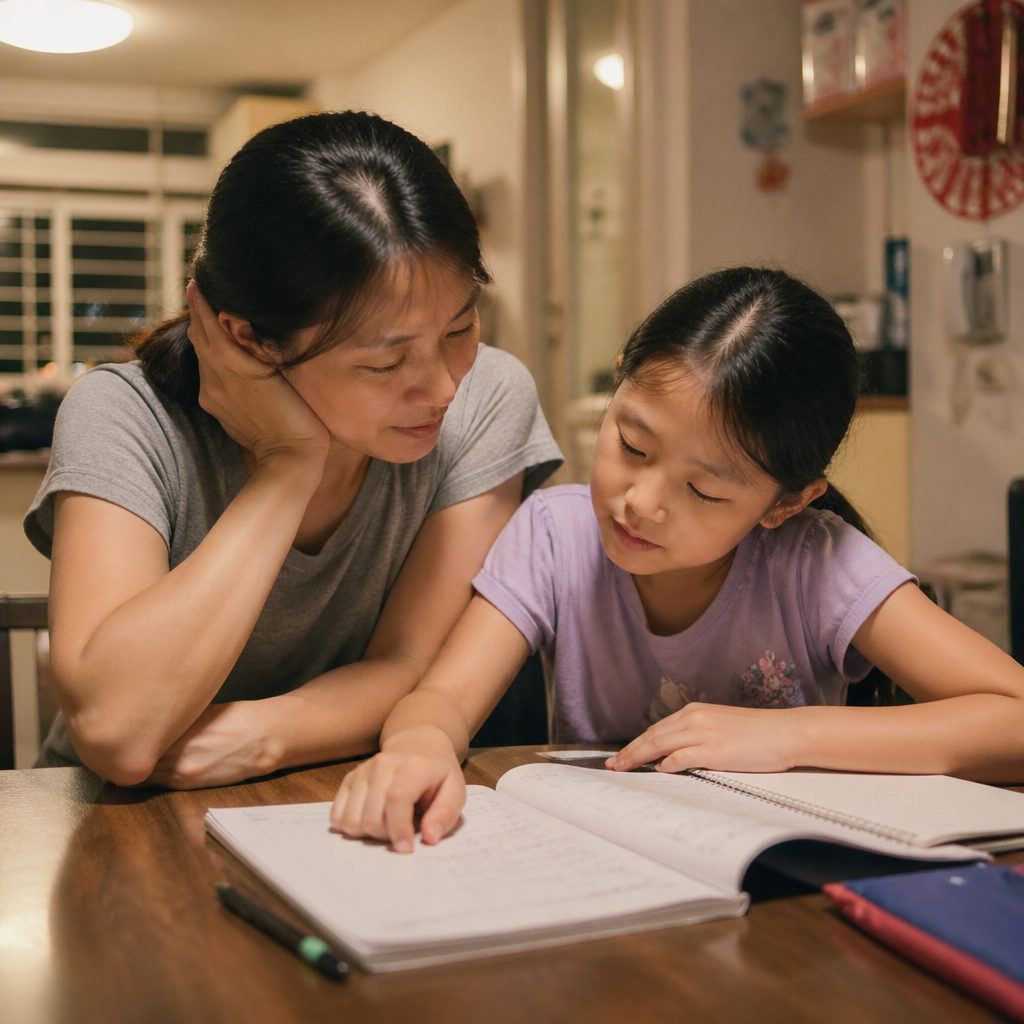
In one to one tuition, learning speed matters because pace affects confidence. A child who is constantly rushed often starts saying things like, “I’m just bad at this” or “I can’t do it.” Many parents know this scene all too well. It is late in the evening, your child is hunched over the dining table, school bag still half-open, staring at a Science question and rubbing out the same line again. They are tired, you are tired, and the tension builds quickly. Very often, the issue is not laziness. The issue is that the concept has not been taught at a pace the child can absorb.
Slow Learning Speed Does Not Always Mean Weak Ability
A child may be bright but cautious. In English comprehension, for example, your child may understand the passage but take longer to infer the author’s tone because they need time to compare the answer choices carefully. A tutor who recognises this can teach answering methods without labelling the child as weak.
Some students also need more repetition because their foundation is patchy, not because they lack ability. Once the missing pieces are rebuilt, their pace often improves naturally. What looks like slowness on the surface may simply be a child trying to make sense of gaps that were never fully addressed.
Fast Learning Speed Also Needs Adaptation
On the other hand, some students grasp basics quickly but lose focus when the lesson drags. In this case, adapting lessons to student ability means moving beyond standard drills. A tutor might introduce more challenging problem sums, timed practices, or mixed-topic questions to keep the child engaged.
This is why one to one tuition works best

when the tutor is not simply teaching more, but teaching at the right speed for that child.
How Tutors Assess the Individual Learning Pace in Students
Before a tutor can adapt effectively, they need to understand what is really happening. This is one of the most important parts of one to one tuition teaching strategies, yet many parents only notice the visible part, the worksheet, the homework, the marks. A stronger tutor is often doing quiet diagnostic work throughout every lesson.
Looking at Where the Child Slows Down
A tutor may notice that your child can solve direct percentage questions but freezes when percentages appear in a real-life context, such as discounts or profit and loss. That tells the tutor the problem is not the concept alone, but application. Instead of repeating the whole chapter, the tutor can focus on that specific gap.
In Chinese, a child may read a passage fluently but struggle to explain meanings in their own words. In that case, the tutor may spend more time on vocabulary usage and oral paraphrasing, rather than simply asking the child to memorise more words.
Watching Response Time, Not Just Accuracy
The individual learning pace in students is not only about whether answers are right or wrong. It is also about how long it takes for understanding to happen. If a child answers correctly only after heavy prompting, that topic is not yet secure. A good tutor notices this and adjusts future lessons accordingly.
This is especially useful in subjects like Math and Science, where a student may appear to know the topic but still cannot apply it independently under exam conditions.
Identifying Emotional Blocks
Sometimes pace is slowed by anxiety, not ability. A child who has been scolded for wrong answers may hesitate before every attempt. In a one-to-one setting, the tutor can create a safer rhythm by asking smaller questions first, praising the process, and reducing fear around mistakes. Over time, the child starts attempting faster because they no longer feel that every wrong answer is a disaster.
This careful observation is what makes a personalised teaching approach Singapore parents appreciate, especially when school feedback alone has not explained why a child is struggling.
One-to-One Tuition Teaching Strategies That Slow Down Effectively Without Losing Progress
When a child needs more time, slowing down should not mean drifting aimlessly. Good one to one tuition uses deliberate methods so the student can catch up without feeling stuck forever.
Breaking Big Concepts Into Smaller Learning Steps
A tutor may split a topic like algebra into micro-skills. First, recognising variables. Then simplifying expressions. Then substitution. Then forming equations from words. For a child who gets overwhelmed by full-page worksheets, this feels much more manageable. Instead of facing ten mixed questions and shutting down, the child handles one skill at a time and builds confidence steadily.
This method also helps tutors pinpoint exactly where confusion begins, which makes revision more targeted and less frustrating.
Using Worked Examples Before Independent Practice
Some students need to see the thinking process clearly. In PSLE Math problem sums, for example, a tutor may first model how to underline key information, draw a model, identify what is known, and decide the operation. Only after two or three guided examples does the child try one alone. This is slower at first, but often faster in the long run because the child learns a repeatable method.
Worked examples are especially useful for children who say, “I understand when you do it, but I don’t know how to start on my own.” That is a very common struggle, and a patient tutor knows how to bridge that gap.
Re-Teaching Through a Different Explanation Style
If the school explanation did not click, the tutor can try another route. In Science, instead of saying “heat causes particles to move faster”, the tutor might compare it to students in a hall, sitting still at first, then moving around more actively when excited. A concrete analogy can make an abstract concept easier to remember.
Sometimes a small shift in explanation style is enough to unlock understanding. That is one of the biggest strengths of one to one tuition teaching strategies.
One-to-One Tuition Teaching Strategies for Students Who Learn Faster and Need More Challenge
Parents sometimes assume tuition is only for children who are behind. But one to one tuition is also valuable for students who learn quickly and need teaching methods that prevent boredom and complacency.
Compacting Routine Practice
If a child already understands the basics of a topic, the tutor does not need to assign ten nearly identical questions. Instead, they might use two or three diagnostic questions to confirm mastery, then move on to more demanding applications. For example, in Secondary Math, if the child can solve basic linear equations easily, the tutor may quickly progress to word problems and multi-step questions.
This keeps lessons efficient and prevents tuition time from being wasted on repetition the child no longer needs.
Stretching Through Higher-Order Thinking
In English, a faster learner may finish comprehension questions quickly but give shallow answers. The tutor can push further by asking, “Why did the writer choose this phrase?” or “How would the tone change if this sentence were removed?” This keeps the lesson challenging without simply piling on more worksheets.
For upper primary and secondary students, this kind of questioning builds depth, which is often what separates average answers from stronger ones.
Building Exam Agility, Not Just Content Knowledge
A child who learns quickly may still lose marks through carelessness or poor time use. In this case, one to one tuition teaching strategies may include timed mini-sections, error analysis, and mixed-topic revision. The pace is faster, but still structured. The tutor is not just feeding more content, but refining performance.
For many families, this is part of a personalised teaching approach Singapore that goes beyond catching up. It helps a capable student use their strengths more effectively in school assessments.
Adapting Lessons to Student Ability Across Different Subjects in Singapore
Different subjects require different forms of adaptation. A tutor who understands this can make one to one tuition much more effective than a one-size-fits-all approach.
Math: Adjusting Cognitive Load
For Math, pace adaptation often means controlling how much information appears at once. A weaker student may work on one concept per page with clear spacing and guided steps. A stronger student may handle mixed-topic practice to build flexibility. In both cases, the tutor is adjusting lesson design, not just speed of speech.
This matters because many students are not confused by Math itself, but by being asked to process too many steps at once.
English: Adjusting Language Support
In English, some children read quickly but write weakly. Others have ideas but struggle to organise them. A tutor may adapt by giving sentence starters, paragraph frames, or oral brainstorming before writing. For a child who freezes during composition, this can be a huge relief. Instead of hearing “just write”, they get a structure they can actually use.
As confidence grows, the tutor can gradually remove these supports so the child becomes more independent.
Science and Humanities: Adjusting Explanation Depth
For upper primary and secondary students, Science and Humanities often require both content and explanation. A child may memorise facts but not know how to phrase answers. A tutor can slow down and explicitly teach answer construction, such as how to link cause and effect in a Science explanation or support a point in Social Studies.
This is where adapting lessons to student ability becomes very practical. It is not just a nice idea. It shows up in the exact way a tutor chooses examples, questions, and response expectations based on the child’s current level.
What Parents Should Look For in a Tutor Using a Personalised Teaching Approach Singapore Families Can Trust
Not every tutor who offers one to one tuition truly adapts to learning speed. Some simply bring assessment books, assign pages, and move on. If you are deciding whether tuition is right for your child, it helps to know what meaningful adaptation looks like.
The Tutor Changes Pace Based on Student Response
A good tutor does not rigidly force the original lesson plan. If your child is clearly lost on fractions, the tutor does not say, “We have to finish decimals today.” They pause, reteach, and adjust. That flexibility is one of the clearest signs of a real personalised approach.
The Tutor Can Explain Why They Are Using Certain Methods
If you ask how lessons are being adapted, the tutor should be able to answer specifically. For example, “Your son understands concepts better when I use visual models first, so I’m doing that before abstract equations,” or “Your daughter knows the content but needs timed practice because speed is affecting her exam performance.” Clear reasoning matters because it shows the tutor is making intentional decisions, not just improvising.
The Tutor Tracks Progress in a Realistic Way
Progress should not only mean test scores jumping immediately. Sometimes the first improvement is that your child starts attempting homework independently, asks more questions, or takes less time to complete revision. These are meaningful signs that the teaching pace is becoming more suitable.
Parents often feel uneasy before starting tuition. That is normal. But when you see a tutor responding thoughtfully to your child’s individual learning pace in students, tuition starts to feel less like pressure and more like support.
Frequently Asked Questions
How do I know if my child needs one to one tuition because of learning speed?
Look for patterns, not just marks. If your child regularly says lessons move too fast, takes much longer than expected to complete homework, or understands only after repeated explanation at home, pace may be an issue. One to one tuition can help when the child needs more tailored teaching time than school can realistically provide.
Will slowing lessons down make my child too dependent on the tutor?
Not if the tutor is using the right methods. The goal is not to spoon-feed, but to build understanding in manageable steps. For example, a tutor may first guide closely through a problem, then reduce support over the next few questions until the child can do it independently. Good tuition should increase confidence and autonomy over time.
What if my child learns quickly? Is one to one tuition still useful?
Yes. Fast learners can benefit when tuition focuses on deeper application, exam strategy, and extension work. The value comes from precision, not just remediation. A tutor can prevent boredom by matching the lesson to the child’s actual level.
How long does it take to see results from adapting lessons to student ability?
It depends on the gap and the child’s confidence level. Some parents notice early changes in attitude within a few weeks, such as less resistance to homework or more willingness to ask questions. Academic results may take longer, especially if foundational gaps are large.
Should I choose a tutor who follows school pace or my child’s pace?
Ideally both, with your child’s pace guiding the route. A skilled tutor keeps school demands in view while adjusting the method and speed so your child can cope. In Singapore, it also helps when the tutor is familiar with MOE expectations and exam formats. You can refer to the Ministry of Education Singapore for official syllabus information.
Conclusion
Teaching methods that adapt to different learning speeds are one of the biggest strengths of one to one tuition. Whether your child needs more time to build foundations, a different explanation style to finally understand a topic, or greater challenge to stay engaged, the right tutor can adjust lessons in a way that feels targeted and encouraging. This is especially important for parents who have watched their child work hard but still feel lost, discouraged, or mismatched to the pace of school lessons.
A strong tutor does more than cover content. They observe carefully, respond to the child’s pace, and use practical methods that fit the student’s current ability. That is what makes a real difference over time.
We hope this article has given you a clearer picture of teaching methods that adapt to different learning
speeds in one to one tuition. If you’re looking for personalised support that matches your child’s pace and learning needs, our tutors at MindFlex are experienced, carefully matched to each student, and ready to help. You can also explore our private home tuition contact page for a consultation and the next steps in finding the right tutor for your child.


