


It is easy to tell a child to “study harder”, but in Singapore’s school system, that advice often leaves students more exhausted, not more effective. Between weighted assessments, EOY exams, PSLE, O-Levels, A-Levels, CCA, tuition, and school projects, many students spend long hours at the desk without seeing results that match the effort. That is why understanding how to study smart matters.

Studying smart means using methods that help your child remember more, spot weak topics earlier, and practise in ways that actually match how exams are set in Singapore.
If your child is revising until 11pm, re-reading notes again and again, and still freezing during tests, the issue may not be effort. It may be strategy. In this guide, we will walk through how to study smart for exams in Singapore using practical methods like active recall, spaced repetition, topical practice, past-year papers, error logs, and realistic study planning around school life.
Key Takeaways
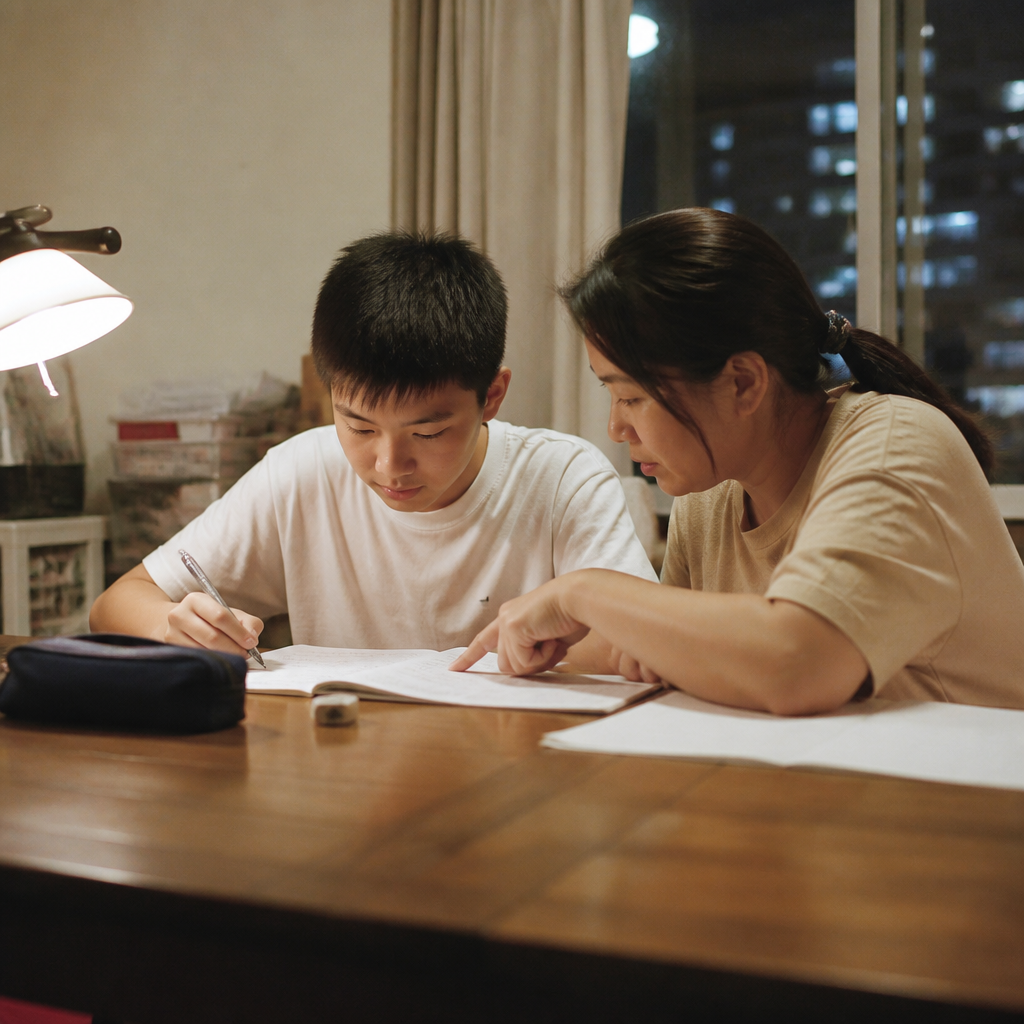
- Studying smart is not about studying less, it is about studying with purpose. For example, a Secondary 3 student who spends one hour testing herself on Chemistry formulas will usually retain more than another student who spends the same hour highlighting the textbook.
- Singapore exam prep works best when revision matches the syllabus and exam format. A Primary 6 student preparing for PSLE Science should focus on common question types, keywords, and application practice, not just memorising definitions.
- A good timetable must fit real life. If your child has CCA on Tuesday and Thursday and tuition on Saturday, the plan should reflect that. Consistency matters more than ambition.
- Active recall, spaced repetition, timed practice, and error logs are some of the best ways to revise faster and remember more. After doing a Math paper, writing down repeated mistakeslike sign errors or careless unit conversion can stop the same marks from being lost again.
- Students who get distracted easily need systems, not guilt. Keeping the phone outside the room during a 30-minute revision block is often more effective than relying on self-control late at night.
- Different stages need different strategies. A Primary student may need shorter study bursts and parent guidance, while JC students need more independent planning and timed essay or paper practice.
What “How to Study Smart” Really Means in Singapore
When parents and students ask how to study smart, they are usually not looking for motivational slogans. They want a system that works under local exam pressure. In Singapore, studying smart means knowing what the school and exam boards are expecting, then revising in ways that match those expectations.
Study for the syllabus, not just the subject
A common mistake is revising too broadly without checking whether the topic is actually tested in the current syllabus. A Secondary 2 student might spend an entire evening on advanced algebra methods found online, then neglect basic graph interpretation that is actually coming out in school. Smart revision starts with knowing the required learning outcomes from school notes, teacher guidance, and the exam scope.
Parents can help with one simple question at dinner: “What exact topics are tested for the next WA?” That small question can shift a child from vague studying to focused preparation.
Study for the exam format, not just content knowledge
Knowing the content is not enough if the student cannot apply it under exam conditions. For example, an A-Level Economics student may understand market failure during class discussion, but still struggle to structure a 10-mark explanation within the time limit. A smart study plan includes both content review and exam-format practice.
Singapore students should get familiar with school papers, specimen papers where relevant, and national exam expectations from sources like SEAB and broader learning directions from MOE’s Learn for Life initiative.
Smart studying is efficient, not lazy
Some students feel guilty if they are not studying for many hours. But four hours of distracted revision is not stronger than 90 minutes of focused active recall and practice. The goal is not to look hardworking. The goal is to retain, apply, and improve.
This mindset matters because many students confuse busyness with progress. A child can sit at the desk all evening and still get very little done. Smart studying is not about shortcuts. It is about choosing methods that produce better results for the same amount of effort.
How to Study Smart for Exams in Singapore with the Right Revision Methods
If you want to know how to study smart for exams in Singapore, start with methods that force the brain to retrieve and apply information. Passive reading feels comfortable, but it often creates the illusion of learning.
Use active recall instead of endless re-reading
Active recall means testing yourself without looking at the answer first. A Secondary 4 History student can close the notes and try to list causes of a conflict from memory, then check what was missed. A JC Biology student can cover the explanation and redraw a process from memory.
This works because the act of retrieval strengthens memory. If your child often says, “I know it when I see it, but I cannot write it during the exam,” active recall is usually the missing piece. Flashcards, self-quizzing, blurting, and teaching the topic aloud are all useful forms of active recall.
Use spaced repetition to stop forgetting
Many students study one topic intensely, then do not revisit it for weeks. By exam time, it feels unfamiliar again. Spaced repetition solves this by reviewing a topic several times over increasing intervals.
For example, a Primary 5 student learning fractions might revise on Monday, do a short practice on Wednesday, and then attempt another set the following Sunday. That pattern is far more effective than one long session followed by nothing.
Do topical practice before full papers
Topical revision helps students plug gaps before they attempt mixed papers. If a Secondary 3 student keeps losing marks in mole concept questions, full papers alone will not solve the issue. He should first work through targeted topical questions, review worked solutions, and only then return to full paper practice.
This is one of the most practical smart study methods for secondary school students, especially when school exams expose clear topic weaknesses.
Keep an error log
An error log is one of the simplest and most underused tools. After each paper or worksheet, record the mistake, the reason, and the correction. For example:
- Misread “state” as “explain” in Geography.
- Forgot to convert cm to m in a Physics calculation.
- Chose evidence in Literature, but did not link it back to the question.
Over time, patterns become clear. This helps revision become corrective, not repetitive.
How to Make a Study Timetable That Works in Real Singapore School Life
Many students know they need a timetable, but they create one that is too ambitious. If your child plans to study from 4pm to 10pm daily despite school ending late, CCA twice a week, and tuition on weekends, the timetable will fail quickly.
Build around fixed commitments first
Start with the non-negotiables: school hours, travel time, meals, tuition, CCA, religious classes, family events, and sleep. Then add revision blocks into the spaces that remain.
For example, a Secondary 2 student with CCA on Wednesday may only manage a 40-minute review session that night. That is fine. Thursday may be the better day for a full 90-minute Math and Science revision block.
Match task type to energy level
Not all study tasks require the same mental energy. After a long school day, few students can do high-focus essay planning at 9.30pm. A smarter choice may be vocabulary review, error log updates, or short topical questions. Save heavier tasks like timed papers or difficult problem-solving for fresher periods, such as Saturday morning.
Use a weekly plan, not just a daily one
A daily timetable can collapse when one thing goes wrong, such as a late dismissal or extra homework. A weekly plan is more flexible. If Monday’s Science revision is missed, it can be moved to Friday without the whole system breaking down.
For PSLE students, parents may prefer a visible weekly chart on the fridge. For JC students, a digital planner may work better. The format matters less than whether it is realistic and reviewed weekly.
Best Ways to Revise Faster and Remember More Before WA, EOY, PSLE, O-Levels, and A-Levels
When exam season arrives, students often panic and start doing everything at once. They print papers, rewrite notes, watch videos, and stay up late. The result is usually fatigue and confusion. The best ways to revise faster and remember more are often simpler and more structured.
Prioritise high-weight weak areas first
A student should not spend equal time on every topic. If a Secondary 4 student is already strong in quadratic equations but consistently weak in trigonometry, revision time should reflect that. In the same way, if an O-Level English student struggles with summary writing, avoiding it because it feels stressful will only delay improvement.
A useful rule is this: difficult and important topics should be revised earlier, not later.
Switch from notes to output
When exams are near, revision should shift from input to output. Instead of reading more, students should produce answers, explain concepts aloud, complete timed questions, and mark their own work carefully.
For example, a JC student preparing for GP can read model essays, but smart revision also means planning essay outlines in 10 minutes and writing introductions under timed conditions. Output-based revision reveals weaknesses much faster than passive review.
Use timed practice to build calm under pressure
Some students know the material but fall apart once the timer starts. Timed practice reduces that shock. A Primary 6 student can practise one comprehension section with a timer. An A-Level student can attempt one full case study question in proper exam timing. This builds pacing, confidence, and familiarity.
Study Tips for Students Who Get Distracted Easily
Many families searching for study tips for students who get distracted easily are not dealing with laziness. They are dealing with overloaded minds, tired bodies, and too many competing distractions.
Reduce friction before the study session starts
A distracted student often loses momentum before revision even begins. Smart studying means preparing the environment before the timer starts.
A simple setup helps: water bottle filled, stationery ready, one subject on the table, phone outside the room. This lowers the chance of “accidental” delays and makes it easier to begin.
Study in short focused blocks
For students who struggle to concentrate, a 25-minute block can work better than a two-hour plan. For example, a Secondary 1 student may do 25 minutes of Geography recall questions, take a 5-minute break, then continue with 25 minutes of Math corrections.
Parents should avoid turning every session into a marathon. Short, repeatable routines often work better than heroic but unsustainable efforts.
Give the brain one clear target
“Go study Science” is too vague. “Finish 8 questions on cells and check mistakes” is clearer. Students are less likely to drift when they know exactly what “done” looks like.
This is especially useful for children who procrastinate because the workload feels emotionally heavy. A specific target makes the first step smaller and less intimidating.
Smart Study Methods for Primary, Secondary, and JC Students
Not every strategy should look the same across age groups. The smartest method is the one that fits the student’s stage, exam demands, and independence level.
Primary school students: keep it short and guided
Primary students usually benefit from shorter sessions, parental check-ins, and visible routines. A Primary 4 child revising Chinese tingxie or Science keywords may need a 20-minute drill, a quick oral recall, and immediate correction.
For PSLE students, parents can help by breaking revision into daily chunks: one Math topic, one English component, one Science recall activity. That feels far less overwhelming than saying, “You need to revise all your subjects.”
Secondary school students: focus on weak topics and exam application
This is where many smart study methods for secondary school students become especially important. Content becomes heavier, and exam questions demand more application. Students should learn to review mistakes independently, revisit weak topics, and use school papers productively.
For instance, a Secondary 3 student who keeps losing marks in source-based History questions should not only memorise content. She must practise reading sources, comparing evidence, and answering in the format teachers expect.
JC students: manage volume and timing aggressively
JC students face a huge content load and much higher time pressure. Smart study here means scheduling review cycles early, condensing notes into recall prompts, and doing timed essay and structured question practice regularly.
If a JC2 student waits until prelim season to start serious timed practice, stress can rise very quickly. Starting earlier, even with one timed task per subject each week, makes a real difference.
Frequently Asked Questions
How many hours should a student study each day?
There is no one perfect number. A more useful question is whether the study time is focused and effective. A Primary student may do well with 45 to 90 minutes outside homework, while a Secondary or JC student may need more during exam periods.
What should a student do if they have been cramming last minute?
Start by stopping the panic cycle. Pick the highest-priority topics, use active recall, and do short targeted practice. If EOY exams are one week away, do not try to rewrite the whole textbook.
Are past-year school papers really important?
Yes, especially when used properly. Past-year papers show question style, difficulty level, and recurring weak areas. But they should not be done blindly. After each paper, the student should review errors and revisit weak topics before moving on.
My child studies a lot but still forgets everything. Why?
This usually happens when revision is too passive. Re-reading and highlighting may feel familiar, but they do not always create strong memory. Switching to active recall, spaced repetition, and teaching-back methods can improve retention significantly.
Should parents supervise every study session?
Not always. Younger students may need more structure, while older students need to build independence. A better approach is light accountability, such as checking the weekly plan, reviewing completed tasks, and discussing mistakes calmly.
Conclusion

Learning how to study smart is not about chasing perfect grades through endless hours at the desk. It is about using the right methods at the right time, aligning revision to the syllabus, practising with purpose, and building routines that fit real Singapore school life. Whether your child is preparing for WA, EOY, PSLE, O-Levels, or A-Levels, the same core principles matter: active recall, spaced repetition, topical practice, error logs, timed practice, and a realistic timetable.
Most importantly, smart studying should reduce panic, not add to it. When students know what to revise, how to revise, and how to track mistakes, they usually feel more in control and more confident. If you would like more academic support, you can also learn more about our tutors at MindFlex.
We hope this article has given you a clearer picture of how to study smart for exams in Singapore. If you’re looking for personalised academic support and a tutor who can help your child build effective revision habits, our tutors at MindFlex are experienced, carefully matched to each student, and ready to help. Contact us for a free consultation and let us find the right tutor for your child.


